
Best Treatment for Parkinson’s Disease in India – Expert Neurologists & Advanced Care
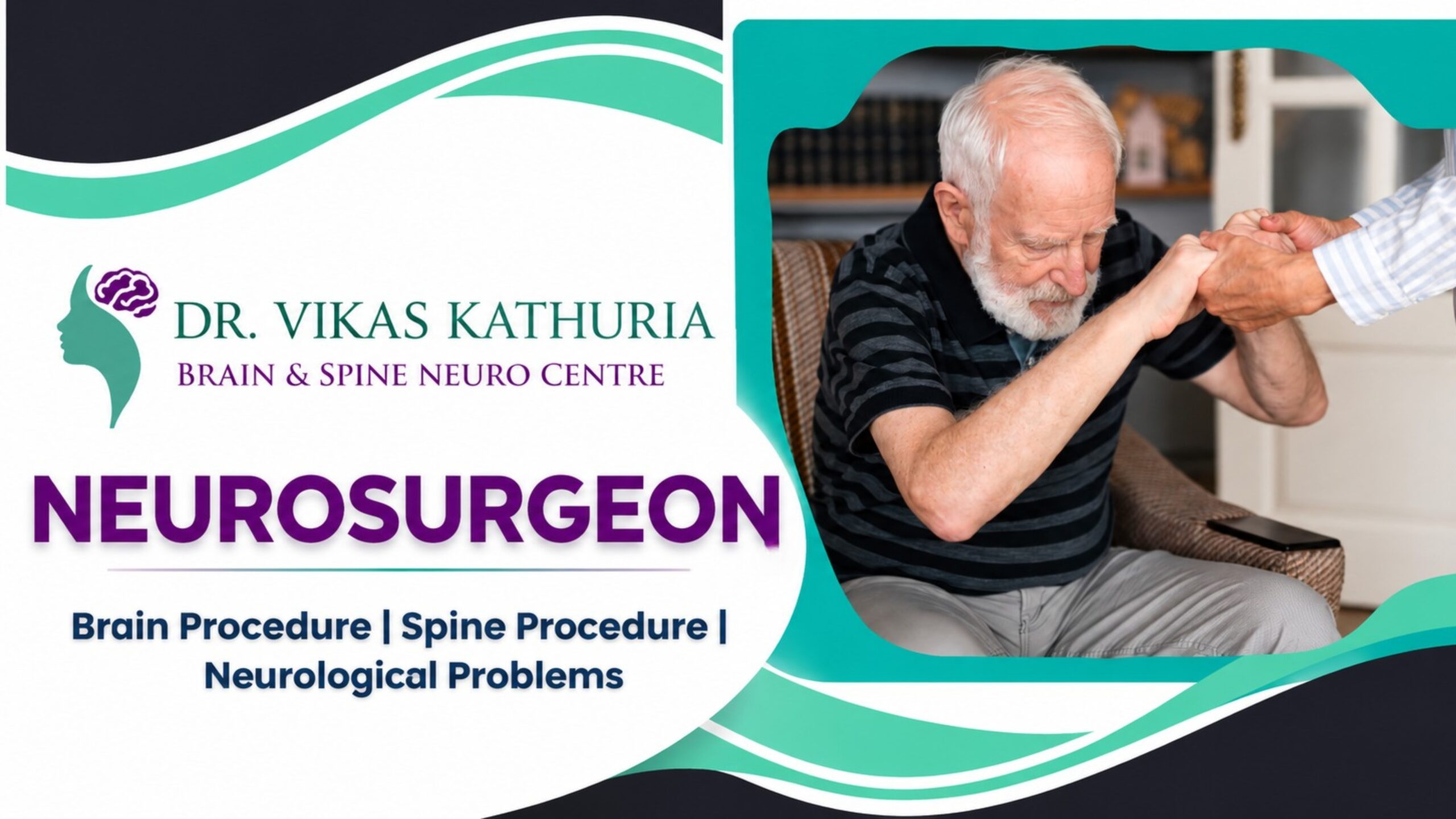
Parkinson’s disease is a long-term neurological condition that slowly affects movement, balance and coordination, and in some people also mood and thinking. For many Indian families, the diagnosis feels frightening. The reassuring truth is this: there is no cure yet, but Parkinson’s can be controlled very effectively with proper medical care.
When people search for the best treatment for Parkinson’s disease in India, they are really looking for a complete system of care: the right medicines, therapy, lifestyle support, regular check-ups and, when needed, advanced procedures. India today has skilled specialists and well-equipped centres, including in Gurgaon and across Delhi NCR, that offer exactly this.
Worried About Tremors or Stiffness?
Early evaluation makes treatment simpler and more effective. Consult Dr. Vikas Kathuria in Gurgaon.
Understanding Parkinson’s Disease Clearly
Parkinson’s develops when certain nerve cells in the brain that produce dopamine gradually die. Dopamine is the chemical messenger that keeps our movements smooth and balanced. When its level falls, the symptoms start to show.
At the beginning, symptoms are often mild and appear on only one side of the body. Over time, the picture becomes clearer.
Common Signs to Watch For
- A small tremor or shake in one hand, especially at rest
- Slow movements and shorter steps
- Stiffness in the arms or legs
- Reduced arm swing while walking
- Handwriting that becomes smaller over time
- A softer, weaker voice
- Poor balance or a stooped posture
Parkinson’s progresses slowly, and it is different for every person. That is why one patient’s plan can never simply be copied for another.
Why Early Diagnosis and the Right Specialist Matter
Early signs are often ignored because families assume they are a normal part of ageing. But when the condition is identified early, treatment can begin before symptoms interfere with daily life, and many patients continue working and living independently for years.
Choosing the right specialist is equally important. A good doctor looks beyond visible symptoms and studies how the disease is progressing. Dr. Vikas Kathuria is known for thorough neurological assessment and long-term management. Regular follow-ups allow medicine doses to be fine-tuned and new symptoms to be addressed quickly, because Parkinson’s never stands still.
Best Treatment of Parkinson’s Disease in India
The best Parkinson’s treatment in India is not a single tablet. It is a combination of medicines, therapies, monitoring and lifestyle guidance, adjusted to the patient’s age, severity of illness and response to medication. India also provides advanced neurological care at a far more affordable price than many countries, with both non-surgical and surgical options available.
The Goals of Treatment
- Improve movement
- Reduce stiffness and tremors
- Maintain independence
- Improve overall quality of life
Medication: The Foundation of Treatment
Medicines remain the backbone of Parkinson’s care. They restore a healthier balance of brain chemistry and reduce symptoms.
- Levodopa with Carbidopa: Levodopa is converted into dopamine in the brain and helps control movement. Carbidopa stops Levodopa from breaking down too early, which makes it work better. This combination is the most effective option for tremor and rigidity.
- Dopamine agonists: These act directly on dopamine receptors in the brain and are used alone or alongside Levodopa.
The body responds differently to medicines as time passes, so doses must be adjusted carefully. Steady supervision from a specialist such as Dr. Vikas Kathuria, regarded by many as the best neurosurgeon in Gurgaon, keeps treatment both effective and balanced. Medication is the core of non-surgical treatment for Parkinson’s, and it works well for many years in most people.
Non-Surgical Treatment for Parkinson’s Disease
Most patients, especially in the early and middle stages, do not need surgery. Supportive therapies play a big role in protecting movement and independence.
Physical Therapy
Physiotherapy improves posture, balance, flexibility and walking. Many patients stoop and take short steps, and guided exercises help preserve muscle tone and coordination. Regular exercise reduces stiffness and the risk of falls, and daily walking makes a visible difference.
Occupational Therapy
Simple tasks such as buttoning a shirt or holding a spoon can become difficult. Occupational therapists teach practical techniques that make daily activities easier, reduce frustration and keep patients active and confident.
Speech Therapy
Parkinson’s often causes a soft voice and unclear speech. Speech therapy improves voice strength, clarity and breath control, and can also help with swallowing problems that may appear at a later stage.
Need a Personalised Treatment Plan?
Every Parkinson’s patient is different. Get a detailed assessment at our Brain & Spine Neuro Centre, DLF Phase IV, Gurugram.
Advanced Treatment Options
When medicines no longer give steady relief, or side effects and dose-related fluctuations become hard to manage, advanced therapy can be considered.
Deep Brain Stimulation (DBS)
DBS is a specialised surgery in which thin electrodes are placed in specific areas of the brain. They correct the abnormal signals that cause tremor and stiffness. It is not a cure, but it can offer major symptom relief and often reduces the amount of medicine a patient needs.
DBS is not right for everyone. A complete assessment of medical history, symptom pattern and overall health is essential before deciding, and this is exactly the kind of evaluation Dr. Vikas Kathuria carries out before advising any advanced procedure.
Personalised Treatment Planning
Some patients have mainly tremors, others mainly stiffness or balance trouble. The most effective care is tailored to the individual and usually focuses on:
- Individual symptom management
- Careful medication balance
- Therapy support
- Emotional and family counselling
- Long-term monitoring
This whole-person approach improves not just mobility but the overall quality of life.
Emotional and Family Support
Parkinson’s affects families as much as patients. Anxiety, low mood and frustration are common, and family support builds confidence. Helping with medicine timings, encouraging exercise and attending follow-up visits together make a real difference.
Long-Term Outlook
With organised treatment, many patients continue to work, travel and enjoy normal activities for a long time. The key is consistent treatment and regular professional monitoring. India’s growing strength in neurology means patients no longer need to travel overseas for good results, and with expert guidance from doctors like Dr. Vikas Kathuria, families are supported at every stage.
Parkinson’s Disease Treatment in Gurgaon & Delhi NCR
Families from Gurgaon, Delhi, Noida, Faridabad and nearby areas can access complete Parkinson’s evaluation, medical management and advanced options like DBS at the Brain & Spine Neuro Centre in DLF Phase IV, Gurugram. Getting care close to home makes regular follow-ups easier, and that consistency is one of the biggest factors in long-term success.
Clinic: Dr. Vikas Kathuria – Brain & Spine Neuro Centre
Location: DLF Phase IV, Gurugram, Haryana
Serving: Gurgaon, Delhi, Noida, Faridabad & Delhi NCR
Website: bestneurosurgeoningurgaon.com
Frequently Asked Questions
Is there a permanent cure for Parkinson’s disease?
No, there is no cure at present. However, medicines, therapy, lifestyle changes and, in selected patients, Deep Brain Stimulation can control symptoms very well for many years.
What is included in non-surgical treatment for Parkinson’s disease?
It includes medicines such as Levodopa with Carbidopa, physical, occupational and speech therapy, regular exercise, and family counselling.
When is surgery considered for Parkinson’s disease?
Surgery such as Deep Brain Stimulation is considered when medicines stop controlling symptoms well, or when side effects and dose-related fluctuations become difficult to manage.
Can exercise improve Parkinson’s symptoms?
Yes. Regular supervised exercise improves balance, flexibility, posture and strength, and helps reduce stiffness and the risk of falls.
How often should a Parkinson’s patient see the specialist?
It depends on symptom severity and how the patient responds to treatment. Regular follow-ups are needed so that medicine doses can be adjusted as the condition changes.
Where can I get Parkinson’s disease treatment in Gurgaon?
You can consult Dr. Vikas Kathuria at the Brain & Spine Neuro Centre, DLF Phase IV, Gurugram, for evaluation, medical management and advanced options such as DBS.
Do I have to travel abroad for good Parkinson’s treatment?
No. India now offers advanced neurological and neurosurgical care, including Deep Brain Stimulation, at a much more affordable cost than many other countries.
Take the First Step Towards Better Movement
Book a consultation with Dr. Vikas Kathuria, Brain & Spine Neuro Centre, Gurgaon, and get a treatment plan made for you.
- Best Neurosurgeon in Gurgaon
- Brain Surgery in Gurgaon
- DBS Surgery
- Deep Brain Stimulation
- Dr Vikas Kathuria
- Levodopa Carbidopa
- Movement Disorders
- Neurological Disorders
- Neurosurgeon in Delhi NCR
- Non-Surgical Treatment for Parkinson's
- Parkinson's Disease Treatment
- Parkinson's Symptoms
- Parkinson's Treatment in Gurgaon
- Parkinson's Treatment in India
- Tremor Treatment