
Spinal Stenosis: Why It Happens and How It’s Treated in Gurgaon & Delhi NCR
Spinal Stenosis: Why It Happens and How It’s Treated in Gurgaon & Delhi NCR
Do your legs turn heavy, numb or crampy after a short walk to the market, and ease only when you sit down? Many people across Gurgaon and Delhi NCR put this down to age, tiredness or “just a weak back”. In reality, it is often spinal stenosis, a narrowing of the spaces inside the spine that squeezes the spinal cord or nearby nerves. The good news is that spinal stenosis is well understood, can be diagnosed with a simple scan, and responds to a range of treatments. This guide explains why it happens, which symptoms matter, and how spinal stenosis treatment in Delhi NCR is planned, from physiotherapy to surgery.
Spinal stenosis is a narrowing of the spinal canal or the openings where nerves exit. It most often affects the lower back (lumbar) and the neck (cervical), and it usually develops slowly with age-related wear and tear. Typical signs are leg pain, numbness, tingling and weakness while walking or standing. Many patients improve with medicines, physiotherapy and lifestyle changes. Surgery, such as decompression, is considered when symptoms are severe, keep worsening, or affect walking, balance, bladder or bowel control.
What Is Spinal Stenosis?
Your spine is a stack of bones (vertebrae) forming a protective channel for the spinal cord and nerve roots. When that channel, or the small side openings called foramina, becomes tighter than it should be, the nerves inside get pinched and irritated. That narrowing is called spinal stenosis. Think of a garden hose being slowly pressed from the outside: the flow gets disturbed, and the nerve signals travelling to your arms or legs get disturbed in the same way.
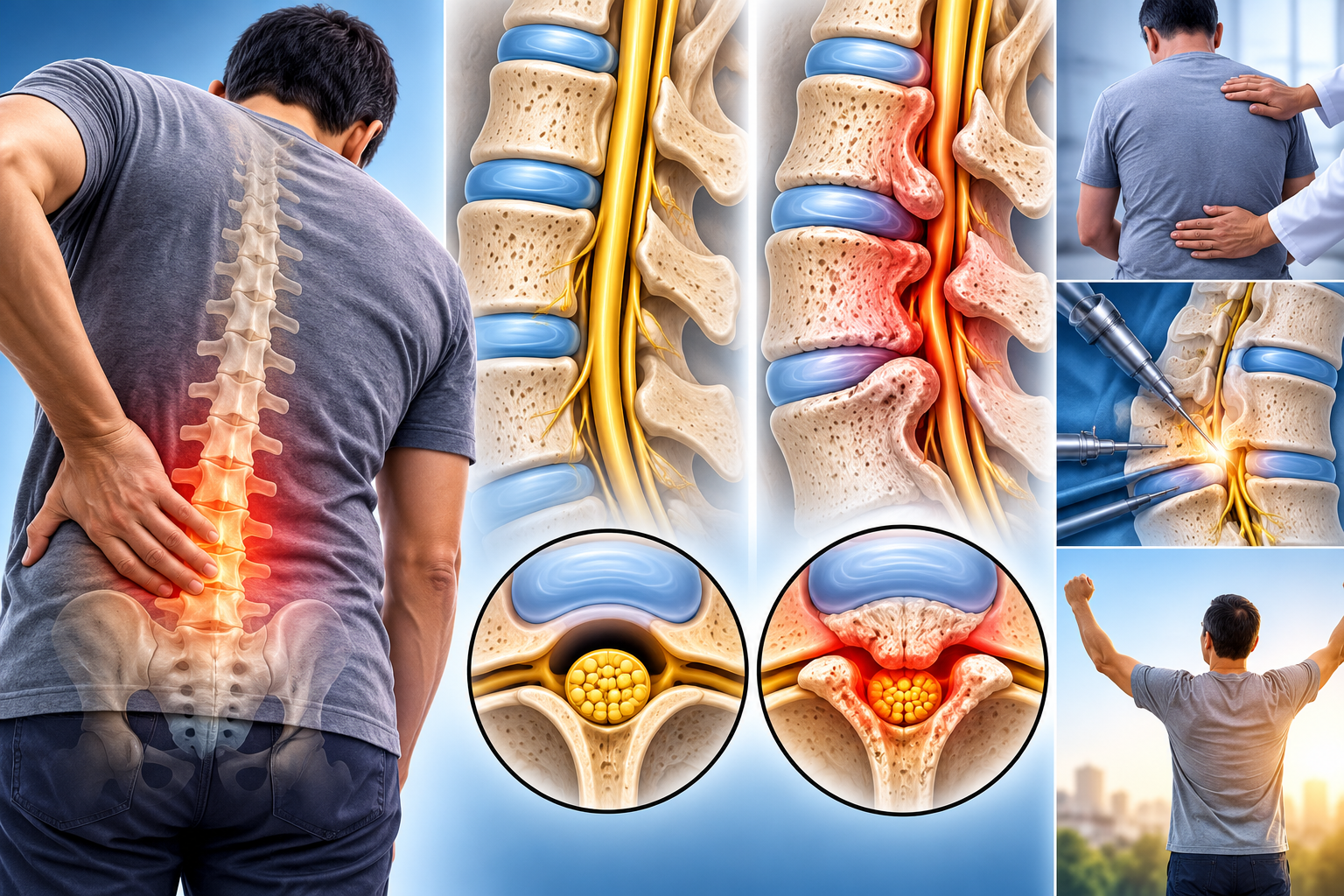
According to the Mayo Clinic, spinal stenosis occurs most often in the lower back and the neck, and most people who have it are older than 50. Some people have no symptoms at all, while others have symptoms that grow gradually over the years.
Types of Spinal Stenosis at a Glance
| Type | Where it occurs | Common symptoms |
|---|---|---|
| Lumbar spinal stenosis | Lower back | Leg cramping, heaviness, sciatica-like pain, relief on sitting or bending forward |
| Cervical spinal stenosis | Neck | Neck pain, arm numbness, clumsy hands, balance problems |
| Foraminal stenosis | Side openings for nerve roots | One-sided radiating pain, tingling in the arm or leg |
Why Does Spinal Stenosis Happen? Main Causes
In most patients, spinal stenosis is a “degenerative” condition. That means the structures of the spine change slowly over time. Several factors can narrow the canal:
1. Arthritis and Bone Spurs
Osteoarthritis is the most common cause. Joints wear down, and the body grows extra bone (spurs) that intrude into the canal.
2. Disc Degeneration
Discs lose water and height with age. A bulging or herniated (slipped) disc can press directly on a nerve root.
3. Thickened Ligaments
The ligaments that hold the spine together can thicken and buckle inward, reducing the space for nerves.
4. Injury or Instability
Fractures, accidents and spondylolisthesis (a vertebra slipping forward) can narrow the canal at one or more levels.
5. Tumours or Cysts
Though less common, growths in or around the spinal canal can cause stenosis-like compression and need prompt evaluation.
6. Born with a Narrow Canal
Some people are born with a naturally small spinal canal and may develop symptoms earlier in adulthood.
Long hours at a desk, daily traffic commutes on NH-48, poor posture over laptops and phones, low vitamin D and little regular exercise all strain the spine. These habits do not directly “cause” stenosis, but they speed up wear in a spine that is already ageing, and they can make symptoms appear sooner or feel worse.
Spinal Stenosis Symptoms: What to Watch For
Spinal stenosis symptoms depend on which part of the spine is affected and which nerves are squeezed. They usually begin mildly, come and go, and gradually become more frequent.
Lumbar (Lower Back) Spinal Stenosis Symptoms
- Pain, cramping or heaviness in one or both legs while walking or standing for long
- Numbness, tingling or a “pins and needles” feeling in the buttocks, thighs or feet
- Relief when you sit, bend forward or lean on a shopping trolley
- Weakness or a feeling that the foot is “dragging”
- Lower back pain that spreads down the leg
Cervical (Neck) Spinal Stenosis Symptoms
- Neck pain and stiffness
- Numbness or tingling in the arms and hands
- Difficulty with fine tasks such as buttoning a shirt or writing
- Unsteady walking or frequent loss of balance
- Sudden or rapidly worsening weakness in a leg or arm
- Loss of control over urine or stools, or difficulty passing urine
- Numbness in the groin or inner thighs (the “saddle” area)
These can be signs of serious nerve compression and should be evaluated by a spine specialist or at an emergency department without delay.
How Spinal Stenosis Is Diagnosed
Because spinal stenosis symptoms can look like those of a slipped disc, sciatica or even poor circulation, an accurate diagnosis is the first step towards the right spinal stenosis treatment. A neurosurgeon will typically follow this path:
- Detailed history: when pain starts, how far you can walk, what relieves it.
- Neurological examination: muscle strength, reflexes, sensation and balance.
- MRI scan: the most useful test, as it shows the spinal cord, nerves, discs and ligaments clearly.
- CT scan or X-ray: helpful to assess bone spurs, alignment and slippage.
- Nerve studies (when needed): to separate spinal nerve compression from other nerve disorders such as neuropathy.
Importantly, the scan must always be matched with your symptoms. Many people show some narrowing on an MRI and never develop pain, so treatment decisions are based on how you feel and function, not on the report alone.
Spinal Stenosis Treatment in Delhi NCR: Non-Surgical Options
Most patients with mild to moderate spinal stenosis start with conservative care. The aim is to reduce inflammation, improve flexibility and strengthen the muscles that support the spine. As the National Institute of Arthritis and Musculoskeletal and Skin Diseases (NIAMS) explains, treatment is planned around your symptoms, their severity and your overall health.
Medicines
Anti-inflammatory medicines and, in some cases, nerve-pain medicines can calm symptoms. They should always be taken under medical guidance.
Physiotherapy
Guided exercises improve core strength, hip flexibility and posture, which helps reduce pressure on the nerves.
Epidural Injections
Steroid injections near the affected nerve can give temporary relief in selected patients, but they do not remove the narrowing.
Lifestyle Changes
Weight control, walking in short intervals, avoiding prolonged standing and using a supportive chair all make a real difference.
Surgery is usually advised only after other treatments have failed to give relief, or when there is significant nerve weakness. A careful evaluation helps you avoid both unnecessary surgery and dangerous delay.
When Is Surgery for Spinal Stenosis Needed?
Your neurosurgeon may recommend surgery if:
- Pain or numbness keeps you from walking, working or sleeping, despite months of proper conservative treatment
- There is progressive weakness, foot drop or loss of balance
- You have bladder or bowel changes linked to nerve compression
- The scan shows severe compression that matches your symptoms
Common Surgical Procedures
- Laminectomy or laminotomy: the back part of the vertebra (lamina) is partly or fully removed to create more room for the nerves.
- Foraminotomy: the nerve exit opening is widened to free a pinched nerve root.
- Spinal fusion: added when the spine is unstable or a vertebra has slipped, so that the segment is stabilised after decompression.
- Minimally invasive decompression: done through small incisions, with the aim of less tissue damage and quicker recovery in suitable patients. Learn more about minimally invasive spine surgery in Gurgaon.
The right option depends on the level of stenosis, your age, other medical conditions and what the scan shows. If your main trouble is the lower back, read our page on lumbar spine surgery. For neck-related stenosis, see cervical spine surgery. Most patients notice relief in leg pain and walking ability after decompression, though results vary and surgery cannot reverse arthritis itself.
Recovery After Spinal Stenosis Treatment
Recovery depends on the type of treatment. After non-surgical care, improvement is gradual over weeks, and exercise has to continue for long-term benefit. After surgery, most patients are encouraged to start walking early, usually within a day or two, with a structured physiotherapy plan. Heavy lifting, bending and long sitting are limited for some weeks. Regular follow-up visits help your doctor monitor healing and adjust your rehabilitation.
Simple Habits to Protect Your Spine
- Stand up and walk for two to three minutes every 30 to 45 minutes of desk work.
- Keep your screen at eye level and your lower back supported.
- Do daily core and hip-strengthening exercises taught by a physiotherapist.
- Maintain a healthy weight, as extra weight increases load on the lower spine.
- Avoid sudden twisting and heavy lifting without proper technique.
- Include calcium and vitamin D in your routine after checking your levels with your doctor.
If you only have mild back or neck discomfort so far, our guides on back pain treatment and neck pain treatment can help you understand your next step.
Consult a Neurosurgeon for Spinal Stenosis in Gurgaon
Dr. Vikas Kathuria is a neurosurgeon (MBBS, MS, M.Ch Neurosurgery) with over 25 years of experience in brain and spine care, and a senior consultant at Max Hospital, Gurgaon. At Kathuria Brain & Spine Neuro Centre, every patient receives a careful examination, a clear explanation of the MRI findings and a treatment plan that starts with the safest effective option, surgical or non-surgical.
Clinic: #7311 (Ground Floor & LGF), Behind DLF Super Mart 2, DLF Phase IV, Near Huda City Centre Metro Station, Gurugram, Haryana 122009
Hours: Mon to Sat 10:30 AM to 12:30 PM and 6:00 PM to 7:30 PM; Sunday 10:00 AM to 2:00 PM
Numbness or Weakness While Walking? Don’t Wait.
Early evaluation of spinal stenosis can protect your mobility and independence.
Frequently Asked Questions About Spinal Stenosis
1. What is the best treatment for spinal stenosis in Gurgaon?
There is no single best treatment. Mild to moderate spinal stenosis often improves with medicines, physiotherapy and lifestyle changes. Surgery is reserved for severe or worsening cases. A neurosurgeon can match the treatment to your scan and symptoms.
2. Can spinal stenosis be cured without surgery?
The narrowing itself does not reverse without surgery, but symptoms can be managed effectively in many patients with exercise, medicines and posture correction. Many people remain comfortable for years without an operation.
3. What are the early signs of spinal stenosis?
Leg or arm numbness, tingling, cramping while walking, and relief on sitting or bending forward are common early signs. Neck stiffness and clumsy hands can suggest cervical stenosis.
4. Is walking good for spinal stenosis?
Gentle, regular walking in short intervals is usually helpful. Many patients tolerate cycling or walking while leaning slightly forward better than long standing. Your doctor or physiotherapist can set a safe routine.
5. Which doctor should I see for spinal stenosis in Delhi NCR?
A neurosurgeon or spine surgeon is the right specialist to confirm the diagnosis, read your MRI and advise on surgical and non-surgical options.
6. How long is recovery after spinal stenosis surgery?
Many patients start walking within a day or two and return to light activity within a few weeks. Full recovery depends on the procedure, your age and your overall health, and physiotherapy supports the process.
7. Is spinal stenosis dangerous if ignored?
Mild cases are usually not dangerous, but severe untreated stenosis can occasionally cause lasting weakness, numbness, or bladder and bowel problems. Sudden worsening needs urgent attention.
Key Takeaways
- Spinal stenosis is a narrowing of the spinal canal, mostly due to age-related wear and tear.
- Leg or arm numbness, cramping and weakness while walking are the main warning signs.
- An MRI, matched with a proper examination, confirms the diagnosis.
- Most patients begin with non-surgical care; surgery helps when symptoms are severe or progressive.
- Emergency signs such as bladder or bowel loss and sudden weakness need immediate care.
Sources: Mayo Clinic, Spinal Stenosis | NIAMS, Spinal Stenosis | More health guides on our blog.
Disclaimer: This article is for general education and is not a substitute for professional medical advice, diagnosis or treatment. Please consult a qualified doctor about your condition.
- Back Pain Treatment Gurgaon
- Best Neurosurgeon Gurgaon
- cervical spinal stenosis
- Dr Vikas Kathuria
- foraminal stenosis
- Kathuria Brain and Spine Neuro Centre
- laminectomy
- leg numbness while walking
- leg pain while walking
- lumbar spinal stenosis
- Minimally Invasive Spine Surgery
- MRI spine
- neck pain treatment Gurgaon
- nerve compression
- neurogenic claudication
- neurosurgeon in Gurgaon
- sciatica treatment
- spinal canal narrowing
- spinal decompression
- spinal stenosis
- spinal stenosis causes
- spinal stenosis Gurgaon
- spinal stenosis surgery
- spinal stenosis symptoms
- spinal stenosis treatment
- spinal stenosis treatment Delhi NCR
- spine care Delhi NCR
- spine specialist Delhi NCR
- Spine Surgeon Gurgaon
- spine surgery Gurgaon