
Epilepsy Surgery in Gurgaon & Delhi NCR: Types, Procedure, Cost & Success Rate
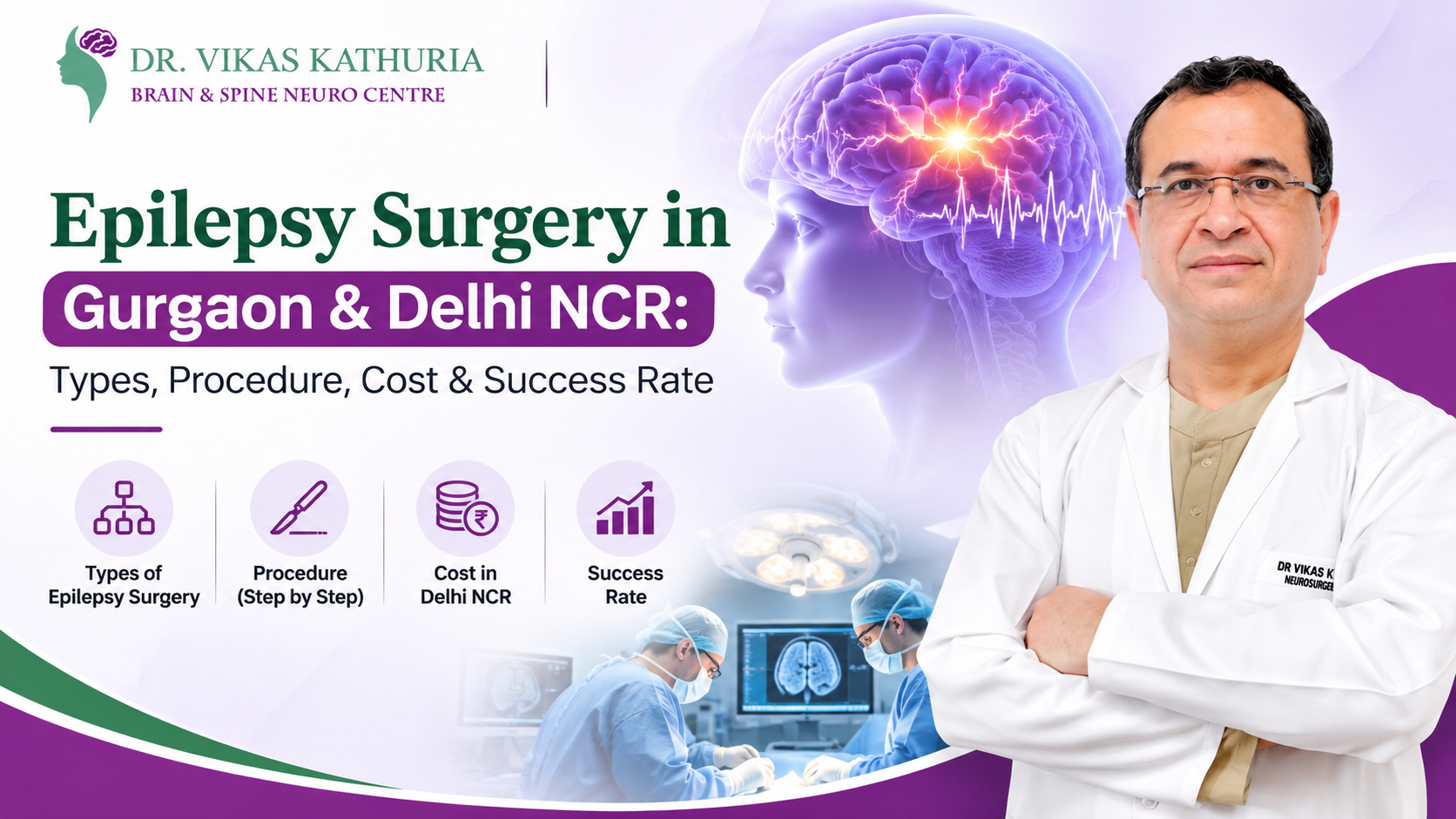
Epilepsy surgery treats drug-resistant epilepsy, which means seizures continue after two properly chosen medicines. The surgeon removes, disconnects or stimulates the brain area that triggers seizures. In long-term studies, about 60–70% of well-selected temporal lobe patients stay seizure-free. Meanwhile, published Indian estimates run from about ₹1.5 lakh to ₹15 lakh, depending on the method. Patients from Gurgaon and across Delhi NCR consult Dr. Vikas Kathuria at three Gurugram clinics.
Living with seizures that medicines cannot control is exhausting. A missed day at work, a fall on the stairs, a night of fear: each seizure steals a little more confidence. If that sounds familiar, epilepsy surgery in Gurgaon and across Delhi NCR may be a realistic next step.
This guide explains who needs surgery, which methods exist, how the procedure works, the pros and cons, the cost and the questions families ask most. In addition, it shows where Gurgaon and Delhi NCR patients can meet Dr. Vikas Kathuria, MBBS, MS, M.Ch (Neurosurgery), for an expert opinion.
In this guide
What Is Epilepsy Surgery?
Epilepsy is a chronic brain condition that causes repeated seizures. The World Health Organization estimates that around 50 million people live with it, and up to 70% could become seizure-free with the right medicines. However, about 3 in 10 patients keep having seizures despite treatment. Doctors call this drug-resistant epilepsy.
Therefore, epilepsy surgery steps in at that point. The surgeon removes, disconnects or stimulates the brain area that starts the seizures. Overall, the goal is simple: stop the seizures or cut them down, while protecting speech, movement, vision and memory. In fact, surgery is never the first treatment. It follows a fair trial of medicines and a detailed work-up, as the Mayo Clinic also explains.
Epilepsy Surgery in Gurgaon: Who Needs It?
Doctors consider epilepsy surgery in Gurgaon and Delhi NCR when medicines fail and tests point to a clear seizure focus. Our epilepsy treatment page covers the basics. Next, here is how candidacy is judged.
✔ You may be a good candidate if
- Seizures continue after two appropriately chosen medicines.
- Seizures start in one area of the brain (focal epilepsy).
- Seizures cause injuries, job loss, school problems or constant fear.
- Medicine side effects, such as drowsiness or poor memory, hurt daily life.
- MRI shows a cause, such as a scar, tumour, cavernoma or old injury.
✖ Surgery may not suit you if
- Seizures start in many brain areas at once.
- Video-EEG shows non-epileptic (functional) seizures, which need different care.
- Medicines have not had an adequate trial.
- The seizure area sits on a vital speech or movement region.
- Other illness makes anaesthesia unsafe.
Because tumours, strokes and head injuries can all trigger seizures, your surgeon also checks the cause. For example, a tumour may need brain tumor surgery, while seizures after trauma may link to a past head injury or a brain stroke.
Pre-Surgical Evaluation: How Doctors Find the Seizure Focus
First, the team confirms that your attacks are epileptic and finds exactly where they begin. This work-up decides almost everything, so it is never rushed. In fact, several tests usually combine.
Video-EEG monitoring
A camera and scalp electrodes record seizures and brain waves together. Doctors admit you and reduce medicines under supervision.
High-resolution MRI
For example, this scan shows scars, tumours, malformations and other structural causes in fine detail.
PET, SPECT or MEG
These functional scans help when the MRI looks normal. In fact, they show where the brain works abnormally.
Neuropsychological tests
Specialists measure memory, language and thinking before surgery. They also give a baseline for comparison later.
Functional MRI or Wada test
These tests map speech and memory areas. As a result, the surgeon can protect them.
Invasive EEG (SEEG)
If scalp tests cannot find the focus, the surgeon places electrodes on or inside the brain for a closer look.
Types of Epilepsy Surgery: Methods Compared
The right method depends on where seizures start, what causes them and the patient’s age. In addition, the table below compares the main options.
| Method | Best suited for | Key point |
|---|---|---|
| Resective surgery (temporal lobectomy, lesionectomy, cortical resection) | Focal seizures from one removable area | The most common method. It offers the best chance of seizure freedom when the focus is clear. |
| Laser or radiofrequency ablation (LITT) | Small, deep seizure foci | MRI-guided and less invasive. Availability varies by centre. |
| Disconnection surgery (corpus callosotomy, hemispherectomy) | Drop attacks, or one badly damaged hemisphere, mostly in children | It reduces seizures and rarely cures them. It protects against dangerous falls. |
| Vagus nerve stimulation (VNS) | Patients unfit for resection | A device under the collarbone sends gentle pulses to the vagus nerve. It lowers seizure frequency. |
| RNS or deep brain stimulation (DBS) | Selected drug-resistant cases | Brain electrodes calm or respond to abnormal activity. See our deep brain stimulation page. |
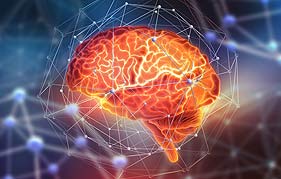
Device-based options such as DBS suit patients who cannot have resective surgery.
Epilepsy Surgery Procedure: Step by Step
Every operation differs, yet most follow this path. Also, your surgeon explains your exact plan before admission.
Team decision. Neurosurgeon, neurologist, radiologist and neuropsychologist review every test together. Then you give informed consent.
Admission and anaesthesia. First, staff clip hair over the surgical site and place an IV line. Most patients sleep under general anaesthesia, while monitors track heart rate and oxygen throughout.
Opening the skull. Next, the surgeon lifts a small bone window. Navigation scans guide the exact spot, and brain-wave recording may refine it.
Treating the focus. Then the surgeon removes, disconnects or ablates the seizure area, or places a stimulation device. Speech and movement areas stay protected.
Closure. Finally, the bone returns to its place, and the skin is closed.
Recovery ward. Afterwards, nurses watch you closely for the first day. Most patients sit up and walk within a day or two.
Follow-up. You continue seizure medicines, usually for at least two years. In addition, scans and EEG checks guide any later reduction.
Pros and Cons of Epilepsy Surgery
✔ Pros
- Real chance of seizure freedom, or far fewer seizures.
- Lower medicine doses over time, with fewer side effects.
- Fewer injuries, emergency visits and hospital stays.
- Better work, study and independence.
- A one-time treatment instead of lifelong, uncontrolled attacks.
✖ Cons
- Surgical risks: infection, bleeding and anaesthesia reactions.
- Possible memory, language or vision changes, depending on the area.
- Mood changes in some patients.
- Seizures can return, and surgery is no guaranteed cure.
- Cost, time away from work and medicines for at least two years.
Success Rate and Risks of Epilepsy Surgery
Long-term studies, including a large temporal lobe surgery series published in Frontiers in Neurology, report seizure-freedom rates of 60–70%. Results vary widely between studies, because researchers define “seizure-free” and follow-up time differently.
First, several factors push the odds up: a clear lesion on MRI, matching test results and complete removal of the focus. In contrast, long seizure history, very frequent seizures and normal MRI scans lower the odds. Therefore, early referral matters. Instead, do not wait for years of failed tablets before asking about surgery.
Epilepsy Surgery Cost in Gurgaon & Delhi NCR
Cost is a major worry for families, so here is a clear picture. The ranges below come from published estimates by Indian hospitals and health portals. However, they are indicative only, not a quote from our clinic.
| Procedure | Indicative range in India |
|---|---|
| Basic resective surgery | ₹1.5 – 3.5 lakh |
| Temporal lobectomy or lesionectomy | ₹2 – 7 lakh |
| Corpus callosotomy | ₹3 – 6 lakh |
| Hemispherectomy | ₹4 – 10 lakh |
| Multiple subpial transection (MST) | ₹5 – 15 lakh |
| Device-based care (VNS, RNS, DBS) | ₹6 – 15 lakh |
Five factors move the final bill:
- the surgical technique and any implant brand;
- pre-surgical tests, especially video-EEG, PET and invasive monitoring;
- hospital, room category and length of stay;
- surgeon and team fees;
- medicines, scans and follow-up visits.
Also check your health insurance. Many policies cover surgery for drug-resistant epilepsy after a waiting period. Furthermore, ask for a written estimate that includes tests, implants and follow-up. Dr. Kathuria’s team shares one after your evaluation.
Recovery and Life After Epilepsy Surgery
Most patients feel tired and sore for the first weeks. Then energy returns steadily. Meanwhile, follow these rules:
- Take seizure medicines exactly as advised, even after seizures stop.
- Keep wound care and follow-up visits on schedule.
- Rest, sleep well and avoid alcohol.
- Ask your surgeon before you return to work, sport or driving.
- Report new headaches, weakness, fever or any seizure at once.
Epilepsy Surgery in Gurgaon: Consult Dr. Vikas Kathuria
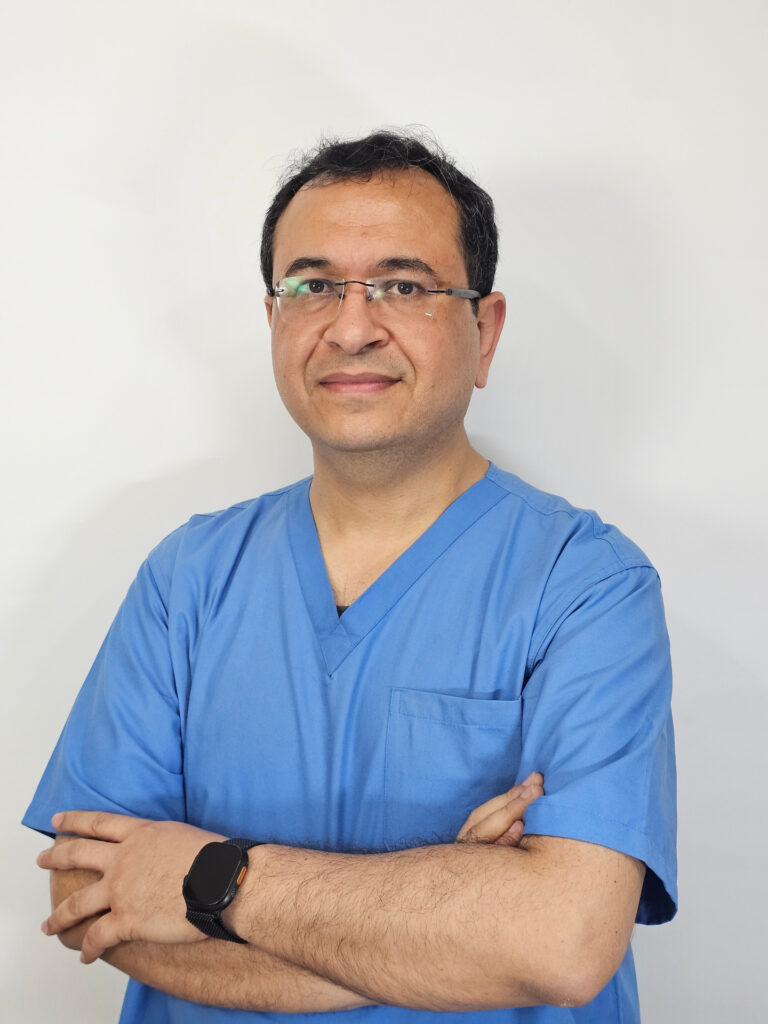
Dr. Vikas Kathuria
MBBS, MS, M.Ch (Neurosurgery) | 25+ years of experience
Dr. Kathuria is a senior consultant neurosurgeon at Max Hospital, Gurgaon. Moreover, he treats brain and spine conditions, including seizure disorders and deep brain stimulation. Meet the doctor
Patients from Gurgaon, South Delhi, Dwarka, Faridabad and other parts of Delhi NCR visit us to discuss epilepsy surgery. First, bring your MRI, EEG reports and a list of past medicines. As a result, the first consultation can focus on your real options. International patients can read our pre-visit guide.
Travel tip from Delhi: take the Yellow Line to Huda City Centre, which is close to our DLF Phase IV clinic.

Visit Dr. Kathuria at 3 Locations in Gurugram
Kathuria Brain & Spine Neuro Centre
#7311, Ground Floor & LGF, Behind DLF Super Mart 2, DLF Phase IV, Near Huda City Centre Metro Station, Gurugram, Haryana 122009
Timings: Mon–Sat 10:30 AM–12:30 PM and 6:00–7:30 PM | Sun 10:00 AM–2:00 PM
Phone: +91-8377080260 / +91-9215151260
Qutub Plaza, DLF Phase 1
423, 4th Floor, Qutub Plaza, Qutub Plaza Road, DLF Phase-1, Sector 26A, Gurugram, Haryana 122002
OPD: Daily 11:30 AM–1:30 PM and 6:00–8:00 PM
Appointments available
South Point Mall, DLF Phase 5
SPO-101A, First Floor, South Point Mall, DLF Phase 5, Sector 53, Gurugram, Haryana 122011
OPD: Daily 11:30 AM–1:30 PM and 6:00–8:00 PM
Appointments from 1 December 2026
Seizures Not Under Control?
Get a clear, honest opinion on whether epilepsy surgery is right for you, and when.
FAQs on Epilepsy Surgery
Is epilepsy surgery safe?
Any brain surgery carries risk, including infection, bleeding and reactions to anaesthesia. Memory, language or vision changes can also occur, depending on the brain area. However, careful testing and a skilled team keep serious complications uncommon. Your surgeon explains your personal risk before you decide.
When is mirgi ka operation (epilepsy surgery) needed?
Doctors suggest surgery when seizures continue after two properly chosen anti-seizure medicines and tests show a clear seizure focus. Frequent injuries, medicine side effects and a lesion on MRI strengthen the case. A video-EEG work-up decides whether you qualify.
What is the success rate of epilepsy surgery?
In long-term studies, about 60–70% of well-selected temporal lobe patients stay seizure-free. Results are lower when MRI shows no lesion or when seizures start outside the temporal lobe. Therefore, early and thorough evaluation improves your odds.
Can epilepsy surgery cure epilepsy?
Surgery can end seizures completely in many patients, and some later reduce or stop medicines. However, no surgeon can promise a cure. Most people continue medicines for at least two years, and seizures can return in some cases.
How much does epilepsy surgery cost in Gurgaon and Delhi NCR?
Published Indian estimates range from about ₹1.5 lakh for basic resective surgery to ₹15 lakh for device-based or complex procedures. The final bill depends on the technique, tests, hospital room and stay. Dr. Kathuria’s team shares a written estimate after evaluation.
How long is the hospital stay and recovery?
Most patients stay several days and walk within a day or two. Full recovery takes several weeks. Your team sets the timing for return to work, wound care and follow-up scans.
Will I stop my seizure medicines after surgery?
Not immediately. Doctors usually keep medicines going for at least two years. If you stay seizure-free, they may lower the dose slowly or stop some drugs.
Does every seizure mean epilepsy?
No. According to the WHO, up to 10% of people have a single seizure in their lifetime, and epilepsy means two or more unprovoked seizures. Fever, low sugar, infection or head injury can also trigger one-off seizures.
Can children have epilepsy surgery?
Yes, in selected cases. Early surgery can protect learning and development when seizures come from one damaged area. Because children need a paediatric epilepsy team, doctors plan these cases together.
How can I consult in Gurgaon?
Call +91-8377080260 or +91-9215151260, or message on WhatsApp. Dr. Kathuria consults at DLF Phase IV, Qutub Plaza (DLF Phase 1) and South Point Mall (DLF Phase 5), Gurugram. Appointments at South Point Mall start from 1 December 2026.
Related reading: Epilepsy treatment, deep brain stimulation in Parkinson’s, stroke in young adults and our brain and spine health blog.
Sources: Mayo Clinic: Epilepsy surgery | WHO: Epilepsy fact sheet | Frontiers in Neurology: Long-term temporal lobe surgery outcomes
Disclaimer: This article is for general education and is not a substitute for personal medical advice. Cost figures are indicative, and treatment decisions, including epilepsy surgery, need a full evaluation by qualified specialists.
- best neurosurgeon for epilepsy in Gurgaon
- Brain Surgery in Gurgaon
- corpus callosotomy
- deep brain stimulation for epilepsy
- Dr Vikas Kathuria
- drug-resistant epilepsy
- drug-resistant epilepsy treatment
- epilepsy specialist in Gurgaon
- epilepsy surgery cost in Gurgaon
- epilepsy surgery cost in India
- epilepsy surgery in children
- epilepsy surgery in Delhi NCR
- epilepsy surgery in Gurgaon
- epilepsy surgery recovery
- epilepsy surgery success rate
- epilepsy treatment in Gurgaon
- focal epilepsy
- hemispherectomy
- laser ablation epilepsy
- mirgi ka ilaj
- mirgi ka operation
- neurosurgeon in Gurgaon
- neurosurgery Delhi NCR
- pre-surgical evaluation epilepsy
- seizure disorder treatment
- seizure surgery
- temporal lobe epilepsy surgery
- temporal lobectomy
- vagus nerve stimulation
- video EEG monitoring