
Delhi NCR Smog and Your Brain: Headaches, Brain Fog, Migraine & Stroke Risk (2026 Guide)
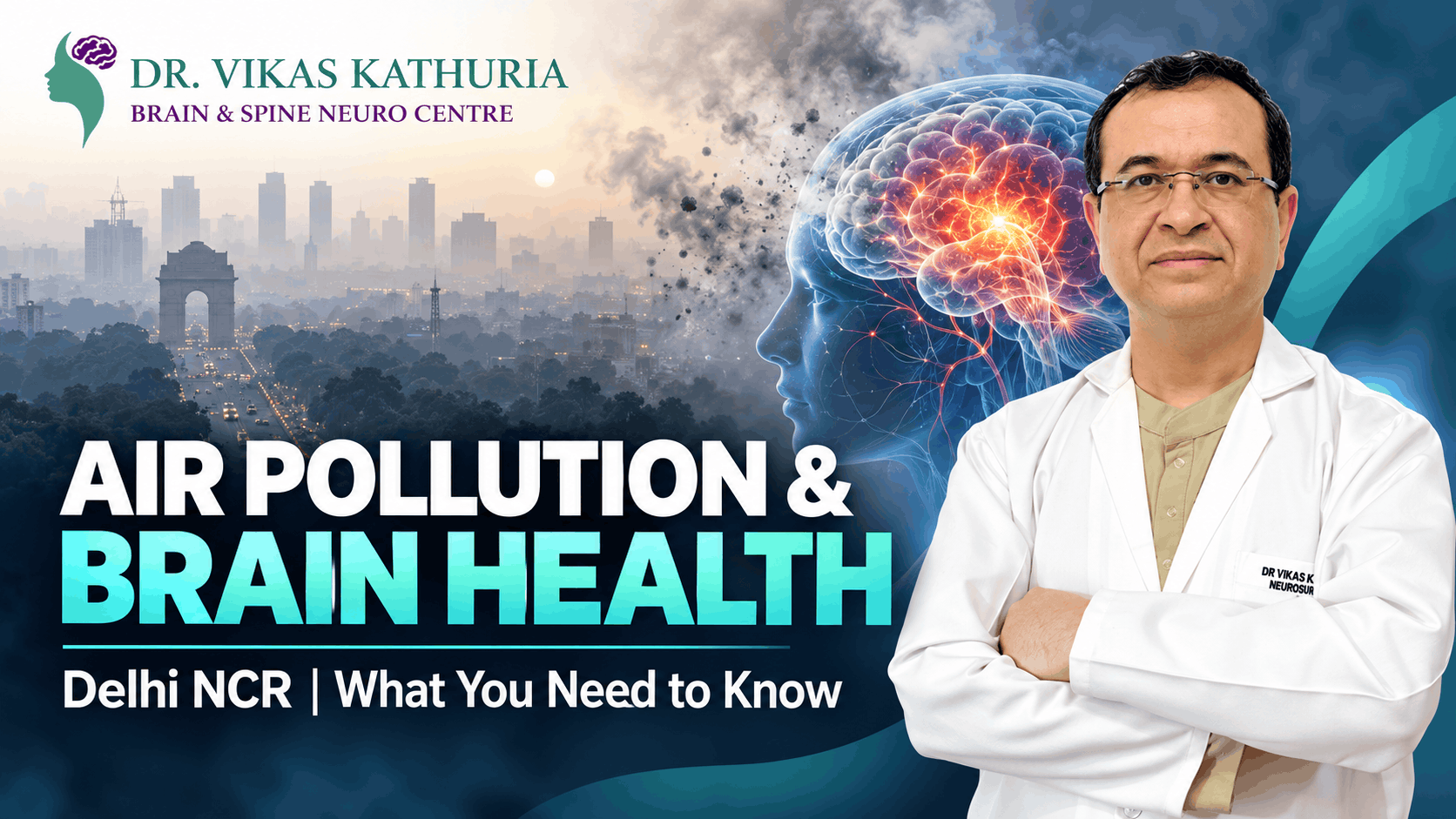
By Dr. Vikas Kathuria, MBBS, MS, M.Ch (Neurosurgery) – Kathuria Brain & Spine Neuro Centre, DLF Phase IV, Gurugram
Every October and November, the same pattern repeats in Gurgaon and across Delhi NCR. The sky turns grey, the AQI climbs, and clinic rooms fill with people saying the same thing: “Doctor, my head has been heavy for days.” Some also report dizziness, poor concentration, disturbed sleep or migraines that suddenly became worse.
Most people blame the cold, work stress or a lack of sleep. But smog is now a serious and often ignored trigger for brain and nerve symptoms. This guide explains, in simple language, what polluted air can do to your brain, which symptoms are common and harmless, which are warning signs, and what you can do at home on a bad-AQI day.

Quick Summary
- Fine particles (PM2.5) and toxic gases can irritate blood vessels and trigger inflammation that affects the brain.
- Common smog-season complaints: headache, migraine flare-ups, brain fog, dizziness, poor sleep and low mood.
- Sudden weakness, speech trouble, severe “worst ever” headache or a seizure is never a smog symptom. It is an emergency.
- Indoor air, a well-fitted N95 mask, blood pressure control and smart timing of outdoor activity reduce your risk.
How Does Polluted Air Reach the Brain?
When you breathe in smog, you are not only inhaling dust. You are inhaling PM2.5 (particles smaller than 2.5 microns), PM10, nitrogen dioxide, ozone, carbon monoxide and traces of heavy metals. PM2.5 is so small that it passes deep into the lungs and can enter the bloodstream. Research also suggests that some ultrafine particles may travel along the nerve that carries the sense of smell and reach the brain directly.
Once these particles circulate in the body, three things can happen:
- Inflammation: The body mounts an inflammatory response that can affect the lining of blood vessels, including those supplying the brain.
- Oxidative stress: Pollutants generate unstable molecules that can damage cells over time.
- Blood vessel and blood pressure changes: Polluted air is linked with narrowing of vessels and rising blood pressure, both of which matter for stroke and bleeding risk.
The World Health Organization recognises air pollution as a major risk factor for non-communicable diseases, including stroke and heart disease. For people living in NCR, where the AQI can stay in the “poor” to “severe” range for weeks, this is a daily health issue, not only an environmental one.
Common Brain and Nerve Symptoms During Smog Season
1. Smog Headache
A dull, band-like or throbbing headache that worsens when you step outside or stay in a poorly ventilated room is very common. Irritation of the nose and sinuses, reduced oxygen delivery, dehydration and disturbed sleep can all contribute. If your headaches follow a pattern with AQI, note it down. It helps your doctor a great deal. You can read more about our approach on the headache pain treatment page.
2. Migraine Flare-Ups
Many migraine patients notice that smoke, strong odours and air pollution act as triggers. If you already live with migraine, smog season can mean more frequent and longer attacks. Our page on migraine treatment in Gurgaon explains the available options.
3. Brain Fog and Poor Concentration
Difficulty focusing, forgetfulness, slow thinking and mental tiredness are frequently reported on high-pollution days. These symptoms are usually temporary, but if they persist for weeks or keep getting worse, they deserve proper evaluation rather than being dismissed as “just smog”.
4. Dizziness, Fatigue and Disturbed Sleep
Poor sleep quality, morning tiredness and light-headedness are common. Because dizziness can also come from blood pressure changes, inner ear problems, anaemia or neck (cervical) issues, it is important to find the real cause.
5. Low Mood and Irritability
Long-term exposure to polluted air has been associated with anxiety and low mood. Staying indoors for long periods, less sunlight and less exercise add to the effect.
Smog, Stroke and Brain Bleed: The Serious Side
Beyond everyday discomfort, long-term exposure to polluted air is linked with a higher risk of ischemic stroke (blocked vessel) and, in people with uncontrolled blood pressure, haemorrhagic stroke (bleeding in the brain). The risk is higher in people who:
- Have high blood pressure, diabetes or high cholesterol
- Smoke or have smoked for many years
- Are above 50, though stroke in people in their 30s and 40s is no longer rare in NCR
- Have a family history of stroke or brain aneurysm
- Skip regular medicines when they “feel fine”
Cold mornings and pollution often arrive together, which compounds the strain on blood vessels. We have explained the cold-weather side of this in detail in our article on why brain stroke and brain hemorrhage risk rises in winter. You can also read about our brain stroke treatment and brain hemorrhage treatment services.
Emergency Warning Signs: Do Not Wait for the AQI to Improve
Go to the nearest hospital emergency immediately if you or a family member has any of these:
- Sudden weakness or numbness of the face, arm or leg, especially on one side
- Drooping of the face or slurred, confused speech
- Sudden loss of vision or double vision
- Sudden, severe headache, unlike anything before, sometimes with vomiting
- Loss of balance with sudden severe dizziness
- Seizure or fainting, or confusion and drowsiness
Remember the word FAST: Face drooping, Arm weakness, Speech difficulty, Time to call for help. Every minute matters in stroke.
Smog Headache or Something More? A Simple Comparison
| Feature | Usually smog or trigger related | Needs urgent or specialist evaluation |
|---|---|---|
| Onset | Gradual, builds over hours or days | Sudden, peaks within seconds to minutes |
| Pattern | Worse on high-AQI days, better indoors | Keeps worsening over weeks regardless of AQI |
| Other symptoms | Blocked nose, itchy eyes, tiredness | Vomiting, vision loss, weakness, seizures, confusion |
| Response to rest and fluids | Improves | Does not improve or worsens |
| Next step | Protect yourself and monitor | Consult a neurologist or neurosurgeon without delay |
AQI-Wise Action Plan for Gurgaon and Delhi NCR Families
You can check the live AQI of your area on the CPCB air quality portal. Here is a practical way to act on it:
| AQI Range | What it means | What to do |
|---|---|---|
| 101 to 200 (Moderate to Poor) | Sensitive people may feel symptoms | Reduce long outdoor workouts; keep medicines handy; drink enough water |
| 201 to 300 (Poor) | Most people may notice discomfort | Exercise indoors; use an N95 mask outside; run an air purifier at home |
| 301 to 400 (Very Poor) | Higher risk for heart, lung and brain issues | Avoid morning walks; limit time outdoors; extra caution for elderly, BP and diabetes patients |
| Above 400 (Severe) | Health risk for everyone | Stay indoors; work from home if possible; seek care early for any neurological symptom |
10 Practical Ways to Protect Your Brain from Polluted Air
- Wear a properly fitted N95 or equivalent mask outdoors. Cloth and surgical masks filter very fine particles poorly.
- Use a HEPA air purifier in the bedroom, where you spend the most uninterrupted hours.
- Shift your walk to the afternoon on bad days. Pollution often peaks in the early morning and late evening.
- Take BP and diabetes medicines regularly. Controlled blood pressure is your strongest shield against stroke.
- Stay hydrated and avoid skipping meals, as both can worsen headaches.
- Keep windows closed during peak pollution hours and ventilate briefly when the AQI dips.
- Avoid smoke indoors: incense, mosquito coils, cooking fumes and cigarettes all add to the load.
- Eat colourful fruits and vegetables; a diet rich in antioxidants supports vessel health.
- Protect your sleep. Poor sleep makes both headaches and blood pressure worse.
- Do not self-medicate repeatedly with painkillers. Frequent use can cause rebound headaches and mask a serious cause.
Who Should Be Extra Careful?
- Senior citizens: blood vessels are less flexible and conditions like hypertension are common.
- Children: they breathe faster and spend more time outdoors, so exposure is relatively higher.
- Pregnant women: should avoid long exposure and consult their doctor about symptoms.
- People with migraine, epilepsy or previous stroke: triggers can be more frequent in smog season.
- Daily commuters, delivery workers and traffic personnel: they cannot avoid the outdoors, so mask quality matters most.
When Should You See a Neurosurgeon or Neurologist?
Book a consultation if you notice any of the following:
- Headaches that are getting more frequent, more severe or waking you from sleep
- Headaches along with vomiting, blurred vision or neck stiffness
- Brain fog or memory trouble that lasts more than a few weeks
- Repeated dizziness, imbalance or episodes of tingling and numbness
- A “mini-stroke” episode where weakness or speech trouble came and went within minutes
- A head injury followed by drowsiness, vomiting or worsening headache
A proper clinical examination, along with tests such as an MRI or CT scan when needed, helps separate harmless trigger-related symptoms from conditions that need treatment, such as a brain tumour, a bleed or a vascular problem. Early diagnosis improves outcomes in almost every neurological condition.

About the Author
Dr. Vikas Kathuria (MBBS, MS, M.Ch Neurosurgery) is a senior neurosurgeon in Gurgaon with more than 25 years of experience in brain and spine care. He consults at Kathuria Brain & Spine Neuro Centre near Huda City Centre Metro Station. Read more on his profile page.
Frequently Asked Questions
Can air pollution really cause headaches?
Yes. Polluted air can irritate the nose, sinuses and airways, trigger inflammation and act as a trigger for migraine. Dehydration and poor sleep during smog season add to this. If headaches are severe, sudden or progressive, get them checked.
Is brain fog during smog season normal?
Mild, temporary brain fog on high-AQI days is common. If it lasts for weeks, interferes with work or comes with memory loss, weakness or mood changes, you should see a specialist.
Does pollution increase the risk of stroke?
Long-term exposure to polluted air is linked with a higher risk of stroke, particularly in people with high blood pressure, diabetes, high cholesterol or a smoking habit. Controlling these risk factors lowers your overall risk.
Which mask is best for smog in Delhi NCR?
A well-fitted N95 or equivalent respirator filters fine particles far better than cloth or loose surgical masks. It must cover the nose and mouth with no gaps at the sides.
Do air purifiers help protect the brain?
A HEPA purifier in a closed room reduces indoor particle levels and can help you breathe cleaner air during sleep. It supports overall health, but it does not replace blood pressure control, medicines and regular check-ups.
Should I see a neurologist or a neurosurgeon for headaches?
Many headaches are managed medically. A neurosurgeon is the right specialist when imaging suggests a structural problem such as a tumour, bleed, aneurysm or pressure-related condition. An initial evaluation will guide you to the right treatment.
Is it safe to exercise outdoors when AQI is high?
On Poor, Very Poor and Severe days, it is better to exercise indoors. Heavy breathing outdoors increases the amount of pollutants you inhale.
Where can I consult a neurosurgeon for brain symptoms in Gurgaon?
You can book a consultation with Dr. Vikas Kathuria at Kathuria Brain & Spine Neuro Centre, DLF Phase IV, Near Huda City Centre Metro Station, Gurugram. Call +91 83770 80260 or use the appointment form on the contact page.
Worried About Persistent Headache, Dizziness or Brain Fog?
Do not wait for the smog to clear. Get a proper neurological evaluation with Dr. Vikas Kathuria.
Book Appointment | Call +91 83770 80260
#7311, Ground Floor & LGF, Behind DLF Super Mart 2, DLF Phase IV, Near Huda City Centre Metro Station, Gurugram, Haryana 122009
Disclaimer: This article is for general education and does not replace a doctor’s advice. If you suspect a stroke or any neurological emergency, go to the nearest hospital immediately.
- Air Pollution and Brain Health
- Air Purifier for Home
- AQI Health Tips
- Best Neurosurgeon in Gurgaon
- Brain Fog Causes
- Brain Hemorrhage Gurgaon
- Brain Specialist in Gurgaon
- Brain Stroke Treatment Gurgaon
- Delhi NCR Air Pollution
- Dizziness Treatment Gurgaon
- Dr Vikas Kathuria
- Gurgaon Air Pollution
- Headache Treatment Gurgaon
- Healthcare in Gurgaon
- Kathuria Brain and Spine Neuro Centre
- Migraine Triggers Smog
- N95 Mask for Smog
- Neuro Health Advisory
- Neurological Symptoms Warning Signs
- Neurologist Gurgaon
- Neurosurgeon Delhi NCR
- Neurosurgeon DLF Phase 4
- Neurosurgeon Gurgaon
- Neurosurgeon Near Huda City Centre
- PM2.5 and Brain
- Pollution and Stroke Risk
- Smog Headache Treatment
- Smog Season Health Care
- Stroke Warning Signs FAST
- Winter Brain Health