
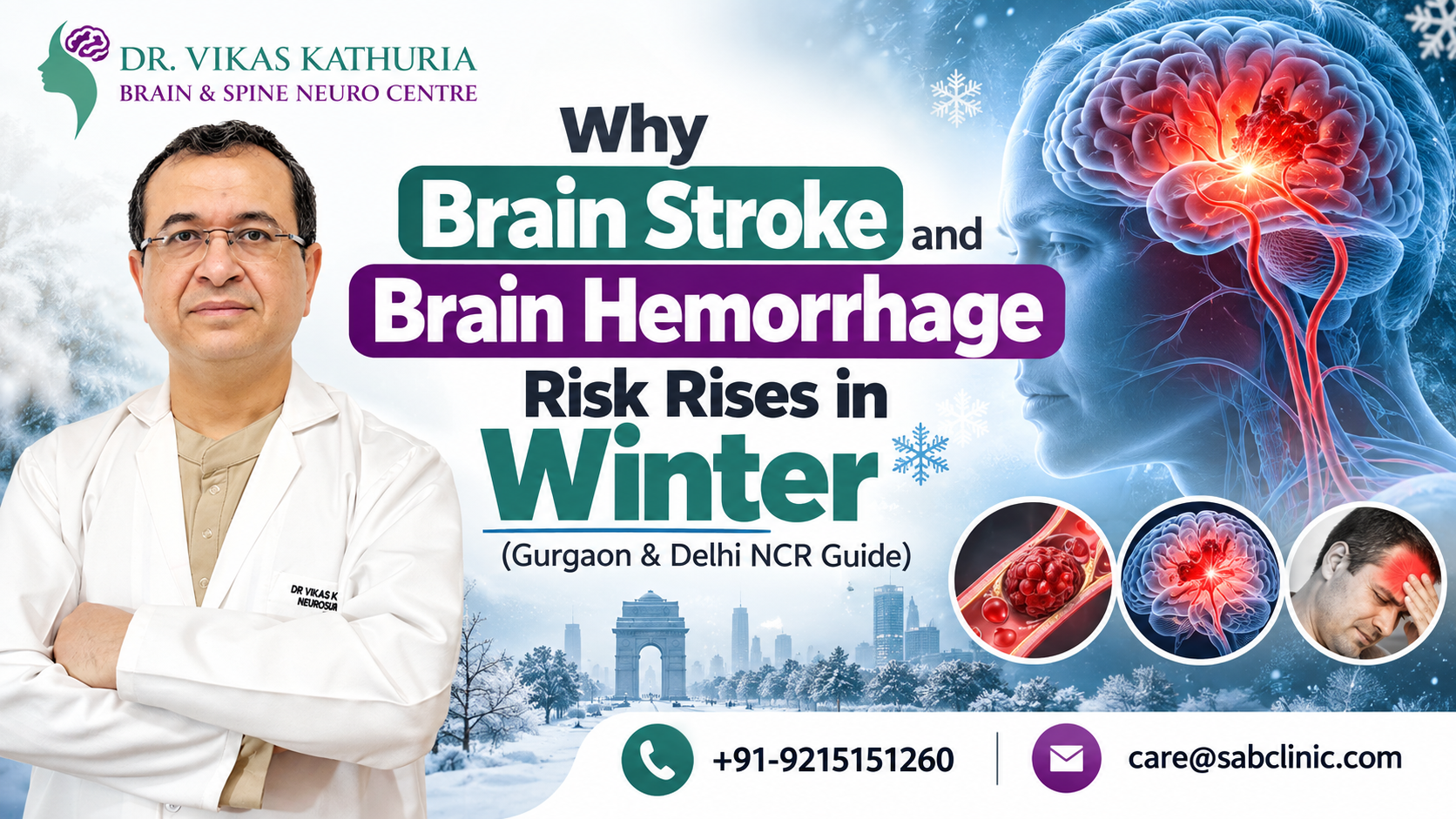
Why Brain Stroke and Brain Hemorrhage Risk Rises in Winter (Gurgaon & Delhi NCR Guide)
Every year, when the first cold wave reaches Gurgaon and Delhi NCR, hospital emergency rooms see a familiar pattern: more patients arriving with sudden weakness, slurred speech, a thunderclap headache or loss of consciousness. Doctors across the region have reported a clear rise in stroke admissions during the colder months, and the numbers climb further when dense fog and smog arrive together. The encouraging part is that most of this seasonal danger is predictable, and a large share of it is preventable.
In this guide, Dr. Vikas Kathuria and the team at Brain & Spine Neuro Centre explain why brain stroke risk in winter goes up, how brain hemorrhage in winter differs from a clot-type stroke, which warning signs you must never ignore, and a practical prevention plan built for families in Gurgaon and Delhi NCR.
Quick Answer
Cold weather narrows blood vessels, raises blood pressure, makes blood slightly thicker and reduces daily activity. Add winter infections, salty food and Delhi NCR’s smog, and the brain stroke risk in winter, including both ischemic stroke (a blocked artery) and brain hemorrhage (a burst vessel) rises, especially in people with hypertension, diabetes, heart disease or a smoking habit. Keep your blood pressure controlled, stay warm, never skip medicines, and call emergency services at the very first warning sign.
In This Guide
- Why brain stroke risk in winter is higher in Gurgaon and Delhi NCR
- Stroke vs brain hemorrhage: the difference
- Eight reasons brain stroke risk in winter goes up
- The Delhi NCR factor: fog, smog and cold waves
- Warning signs you must never ignore
- What to do in the first hour
- Who is at higher risk
- How to reduce brain stroke risk in winter
- Diagnosis and treatment
- FAQs
1. Why Brain Stroke Risk in Winter Is Higher in Gurgaon and Delhi NCR
The brain depends on a steady, well-regulated blood supply. Anything that disturbs that supply, a clogged artery or a weakened vessel that bursts, can damage brain tissue within minutes. Winter disturbs the supply in several ways at once, which is why brain stroke risk in winter is a real concern for every household. Hospitals in the capital region have reported roughly a 9 to 15 percent increase in stroke, heart attack and high blood pressure emergencies during cold-wave mornings, and some specialists have described much sharper jumps when low temperatures coincide with heavy pollution.
Global research points the same way. Large studies of bleeding inside the brain have found that intracerebral hemorrhage peaks in the colder months, and that the risk rises as the temperature falls. For a city like Gurgaon, where long commutes, stress, desk jobs and untreated hypertension are common, the winter months deserve extra attention.
2. Stroke vs Brain Hemorrhage: Know the Difference
“Stroke” is an umbrella term. There are two main types, and they need very different emergency treatment, which is why a scan is always done first.
| Feature | Ischemic Stroke | Brain Hemorrhage (Hemorrhagic Stroke) |
|---|---|---|
| What happens | A clot blocks an artery and starves part of the brain of blood | A weakened vessel bursts and bleeds into or around the brain |
| How common | Most strokes | Less common, but often more dangerous |
| Typical cause | Plaque, clots, irregular heartbeat, diabetes | Long-standing high blood pressure, aneurysm, vessel malformation |
| Typical clues | Sudden weakness, face droop, speech trouble | Sudden severe headache, vomiting, drowsiness, seizure |
| Winter link | Thicker blood, vessel narrowing, less activity | Blood pressure spikes in cold, aneurysm rupture |
A particular type of brain hemorrhage in winter, called subarachnoid hemorrhage, is often caused by the rupture of a brain aneurysm, a weak, balloon-like bulge in a vessel wall. Doctors have noted that these bleeds are reported more often in colder weather. If you want to understand this condition in detail, read our page on brain aneurysm repair in Gurgaon.
3. Eight Reasons Brain Stroke Risk in Winter Goes Up
1. Blood Vessels Constrict
Cold makes arteries narrow to preserve body heat. The heart must push harder, which raises blood pressure and strains fragile vessels in the brain.
2. Blood Becomes Thicker
In cold weather the blood tends to clot more easily and becomes more concentrated, which can favour a clot forming in a narrowed artery.
3. Morning Blood Pressure Surge
Blood pressure naturally peaks in the early hours. In winter this surge is higher, and stepping out into freezing air makes it worse.
4. Less Physical Activity
Short days and cold mornings reduce walking and exercise. Weight gain, higher sugar and poorer circulation follow.
5. Salty, Fried, Heavy Food
Winter weddings, parathas, pickles and fried snacks raise sodium intake, and extra salt pushes blood pressure up.
6. Winter Infections
Flu and chest infections cause body-wide inflammation, which is linked with a higher short-term chance of stroke.
7. Less Water, Less Sunlight
We drink less when we are not thirsty, so dehydration quietly thickens the blood, while low sunlight lowers vitamin D and affects mood and routine.
8. Skipped Medicines
Missed blood pressure or diabetes tablets during busy festive and holiday weeks are a common and avoidable trigger.
These factors rarely act alone, and together they explain why brain hemorrhage in winter and clot-type strokes both increase. A person with untreated hypertension who skips medicines, eats a salty meal and walks out into a foggy 6 AM chill has stacked several risks in one morning.
4. The Delhi NCR Factor: Fog, Smog and Cold Waves
Brain hemorrhage in winter and stroke in Gurgaon and Delhi NCR are not only about temperature. Fine particulate matter (PM2.5) from the winter smog enters the bloodstream through the lungs, inflames blood vessels and can make arteries stiffer. Doctors in the region have repeatedly warned that cold weather combined with pollution multiplies stroke risk compared with either factor alone, particularly for people whose blood pressure is not controlled.
Smart Habits on Smoggy, Cold Days
- Skip the pre-dawn walk on high-AQI or dense-fog days. Exercise indoors or after the sun is up.
- Wear an N95-type mask outdoors when pollution is severe.
- Use an air purifier in the bedroom if you can, and keep rooms warm but ventilated.
- Check your blood pressure every morning during cold spells.
5. Warning Signs You Must Never Ignore
Doctors use the BE-FAST check to spot a stroke quickly. If even one of these appears suddenly, treat it as an emergency:
B – Balance
Sudden dizziness, loss of balance or coordination.
E – Eyes
Sudden blurred, double or lost vision in one or both eyes.
F – Face
One side of the face droops or the smile looks uneven.
A – Arm
Weakness or numbness in one arm or leg; it drifts down when raised.
S – Speech
Slurred speech, confusion, or trouble understanding simple words.
T – Time
Note the time symptoms began and call for help immediately.
Extra Red Flags for Brain Hemorrhage
- A sudden, explosive headache, often described as the worst of your life
- Repeated vomiting along with severe headache
- Stiff neck, sensitivity to light, or sudden drowsiness
- A seizure, fainting or unexplained confusion
Do not wait to see if it settles. A burst vessel needs urgent imaging and specialist care.
6. What to Do in the First Hour
In stroke care, minutes matter, and this is doubly true for brain hemorrhage in winter. For a clot-type stroke, clot-dissolving treatment is generally most effective within the first few hours, and in a hemorrhage, early control of bleeding and pressure on the brain can change the outcome.
Emergency Action Plan
- Call an ambulance immediately (112 or 108). Do not drive yourself if you are the patient.
- Note the exact time symptoms started and tell the medical team.
- Lay the person down with the head slightly raised, loosen tight clothing, and keep them warm.
- Do not give food, water or tablets, including aspirin, because swallowing may be unsafe and the stroke type is not yet known.
- Go to a hospital with 24×7 CT/MRI and neurosurgical support, not the nearest clinic that lacks them.
7. Who Faces a Higher Brain Stroke Risk in Winter?
- People with high blood pressure, especially if it is untreated or irregularly treated
- Those with diabetes, high cholesterol or heart rhythm problems
- Adults above 50, though stroke in younger adults is rising, as we explained in our guide to stroke in young adults in Gurgaon & Delhi NCR
- Smokers and people who drink heavily
- Anyone with a known brain aneurysm or a past stroke or head injury
- People with a sedentary lifestyle, obesity or chronic stress
8. How to Reduce Brain Stroke Risk in Winter: Checklist for Gurgaon and Delhi NCR
Control Blood Pressure
Measure at home each morning, record readings, and take medicines at the same time daily. Never stop them on your own.
Cut the Salt
Limit pickles, papad, namkeen, packaged soups and fried food. Add fruit, vegetables, nuts and whole grains.
Dress in Layers
Cover head, neck, hands and feet. Avoid sudden jumps from a hot room into freezing air.
Stay Active Indoors
Aim for about 30 minutes of movement daily. Warm up indoors before any outdoor exercise.
Drink Enough Water
Sip warm water, soups and herbal teas through the day, even when you do not feel thirsty.
Quit Smoking
Smoking damages vessel walls and magnifies every other winter risk. Seek help to stop.
Get Your Flu Shot
Preventing influenza and chest infections reduces inflammation-related risk.
Get a Winter Check-up
Review blood pressure, sugar, cholesterol and heart rhythm with your doctor before the cold peaks.
Doctor’s Tip
Avoid straining in a very cold bathroom and avoid a sudden, extremely hot or cold shower in the early morning if you have hypertension. Abrupt temperature changes and straining can both push blood pressure up quickly. If you are on blood thinners or aspirin, do not start, stop or change them without your doctor’s advice.
9. Diagnosis and Treatment of Stroke and Brain Hemorrhage
The first step is always an urgent CT or MRI scan, often with an angiogram, to show whether the problem is a blockage or bleeding and exactly where it is. The treatment plan depends on that result:
- Ischemic stroke: clot-dissolving medicines or mechanical clot removal in selected patients, followed by medicines to prevent another stroke. Learn more on our brain stroke treatment in Gurgaon page.
- Brain hemorrhage: blood pressure control, monitoring of pressure inside the skull, and in suitable cases surgery to remove the clot or secure a bleeding vessel. See our brain hemorrhage treatment page for details.
- Aneurysm-related bleeding: the weak vessel is secured through clipping or coiling, depending on the case.
- Head injury with bleeding: winter fog also increases road accidents. Read about head injury treatment.
- Recovery: physiotherapy, speech therapy and risk-factor control reduce the chance of a repeat event.
Persistent or recurring headaches can also be an early signal that deserves proper evaluation. If this applies to you, see our headache pain treatment page.
Consult Dr. Vikas Kathuria
Dr. Vikas Kathuria (MBBS, MS, M.Ch Neurosurgery) is a senior neurosurgeon with more than 25 years of experience in brain and spine care across Gurgaon and Delhi NCR. If you have high blood pressure, a family history of stroke, a known aneurysm, or recurring severe headaches, a pre-winter evaluation can help you stay one step ahead. Learn more about the clinic.
10. Frequently Asked Questions
Q1. Why does brain stroke risk rise in winter?
Cold narrows blood vessels, raises blood pressure and can make blood thicker, while reduced activity, salty food, infections and pollution add to the load. Together these factors raise the chance of both blockage-type stroke and brain hemorrhage.
Q2. Can cold weather really cause a brain hemorrhage?
Cold weather does not directly burst a vessel in a healthy person, but it can push blood pressure sharply upward. In someone with uncontrolled hypertension or a weak vessel such as an aneurysm, that spike can trigger bleeding.
Q3. Is stroke more common in Delhi NCR in winter?
Doctors across Delhi NCR have reported increases in stroke admissions during cold waves, especially when low temperatures combine with smog. Controlling blood pressure and avoiding extreme cold exposure helps lower your personal risk.
Q4. What are the early warning signs of a stroke?
Sudden face drooping, arm or leg weakness, slurred speech, vision loss, loss of balance or a thunderclap headache are the main signs. Use the BE-FAST check and call emergency services at once if any appear.
Q5. Should I avoid morning walks in winter?
Not exercise itself, but timing matters. If you have hypertension or heart disease, avoid very early, freezing or smoggy walks. Warm up indoors, dress in layers and walk after sunrise or move your routine indoors.
Q6. How can I prevent a stroke in winter?
Check blood pressure daily, take medicines regularly, reduce salt, stay hydrated, keep warm, quit smoking, manage diabetes and cholesterol, and get a check-up before winter peaks.
Q7. What should I do if someone has a stroke at home?
Call an ambulance immediately, note the time symptoms began, lay the person down with the head slightly raised, and do not give food, water or medicines. Take them to a hospital with CT/MRI and neurosurgical support.
Q8. When should I see a neurosurgeon in Gurgaon?
See a neurosurgeon promptly for sudden severe headache, known aneurysm, head injury, or recurring neurological symptoms. For emergencies, do not wait for an appointment and go to the nearest equipped hospital.
Protect Your Brain This Winter
Do not wait for an emergency to learn your risk. Book a consultation with Dr. Vikas Kathuria at Brain & Spine Neuro Centre, DLF Phase IV, near Huda City Centre Metro Station, Gurgaon.
Conclusion
Brain stroke risk in winter is real, and brain hemorrhage in winter can strike without warning. Winter does not cause strokes by itself, but it creates the perfect conditions for them: higher blood pressure, thicker blood, less movement, saltier food and polluted air. For families in Gurgaon and Delhi NCR, the most powerful protection is simple: control blood pressure, keep warm, stay active indoors, take medicines regularly and learn the BE-FAST signs. If you or a loved one is at risk, schedule an evaluation before the cold peaks, and in an emergency, act without delay.
Further Reading
Medical disclaimer: This article is for general education and is not a substitute for professional medical advice, diagnosis or treatment. If you suspect a stroke or brain hemorrhage, call emergency services immediately.
- Brain Aneurysm Treatment
- Brain Hemorrhage in Winter
- Brain Hemorrhage Treatment Gurgaon
- Brain Stroke Risk in Winter
- Dr Vikas Kathuria
- Gurgaon Healthcare
- High Blood Pressure and Stroke
- Kathuria Brain and Spine Neuro Centre
- Neuro Health Advisory
- Neurosurgeon Delhi NCR
- Neurosurgeon Gurgaon
- Stroke Prevention Delhi NCR
- Stroke Symptoms BE-FAST
- Stroke Treatment Gurgaon
- Winter Health Tips Gurgaon
- Winter Stroke Delhi NCR