
Bell’s Palsy in Winter: Muh Tedha Ho Jaye To Kya Karein (Gurgaon & Delhi NCR Guide)

Brain Care | Gurgaon & Delhi NCR
By Dr. Vikas Kathuria, MBBS, MS, M.Ch (Neurosurgery) | Updated 29 October 2026 | 9 min read
You wake up on a cold morning, brush your teeth, and notice that water leaks from one corner of your mouth. In the mirror, one side of your face looks flat and your smile is crooked. The eye on that side will not close properly. For most people the first thought is “Mujhe stroke aa gaya.” Very often, though, the cause is Bell’s palsy, a sudden weakness of the facial nerve that becomes more common to see in clinics when the Delhi NCR cold wave arrives.
This guide explains what Bell’s palsy is, why winter seems to bring more cases, how to tell it apart from a stroke, and what you should do in the first 72 hours, which are the hours that matter most.
QUICK ANSWER
Bell’s palsy is a sudden, usually temporary weakness of one side of the face caused by swelling of the facial nerve. Cold weather is a suspected trigger, though not a proven cause. See a doctor the same day, because a sudden facial droop can also be a stroke. If it is Bell’s palsy, steroid treatment started within 72 hours improves the chance of full recovery, and most people get better within 3 to 6 months.
What Is Bell’s Palsy?
The facial nerve (the seventh cranial nerve) carries signals from the brain to the muscles that let you smile, blink, frown and close your eyes. It also supplies tear glands, saliva glands and part of your taste sensation. In Bell’s palsy this nerve becomes inflamed and swollen inside the narrow bony canal it passes through near the ear. The squeezed nerve cannot carry signals properly, and the muscles on that side of the face become weak or, in severe cases, completely paralysed.
Doctors call it idiopathic facial paralysis because nobody knows the exact cause. A viral trigger, especially reactivation of the herpes simplex virus, is the most widely accepted explanation. It can affect any age, but it appears more often in adults, in people with diabetes, and during or after viral illnesses. Our service page on Bell’s Palsy Treatment in Gurgaon explains the clinical side in more detail.
Why Does Bell’s Palsy Seem to Increase in Winter?
Many patients clearly remember a cold draught on the face just before the problem started: a bike ride on a foggy morning, sleeping under a fan or AC blowing on one side, or a car window left open. The scientific evidence is suggestive, but it is not settled, and it is better to be honest about that.
- A study of hospitalised patients in Hangzhou found that low temperature and high air pressure raised the risk, and about one-third of the patients had clear cold or wind exposure to the face before onset.
- A multicentre case-crossover study of 825 patients reported that sudden changes in temperature and atmospheric pressure raised the risk, and the effect was stronger in people with diabetes.
- A hospital study from Riyadh saw more cases in the winter months but could not prove a statistically significant link with cold temperature.
The practical takeaway: cold and sharp weather swings may act as a trigger in people who are already vulnerable, but cold alone does not “cause” Bell’s palsy. In Delhi NCR, where mornings swing from warm afternoons to cold, smoggy nights between November and January, the risk window is real enough to be careful. If you want to know how the same season affects the brain in other ways, read our guides on winter stroke and brain hemorrhage risk and Delhi NCR smog and your brain.
Symptoms of Bell’s Palsy (Chehra Tedha Hone Ke Lakshan)
Symptoms usually appear over a few hours and are at their worst within about 48 to 72 hours. Most patients notice weakness on only one side of the face.
- Drooping of the face on one side, with the mouth pulled to the healthy side
- Inability to close the eye fully, or a constantly watering or dry eye
- Inability to wrinkle the forehead or raise the eyebrow on the affected side
- Difficulty smiling, whistling, puffing the cheeks or drinking without dribbling
- Pain or numb feeling behind the ear, often a day or two before the droop
- Changed taste, increased sensitivity of hearing to sounds on that side, or drooling
Bell’s Palsy vs Stroke: Do Not Guess
This is the most important section of the article. A stroke can also cause a drooping face, and a stroke needs emergency treatment within hours. The two can look alike at the beginning, so a doctor must examine you. Use the table only as a guide, never as a reason to wait at home.
| Feature | Bell’s Palsy | Stroke |
|---|---|---|
| Forehead | Weak, cannot wrinkle or raise eyebrow | Often spared, forehead can still move |
| Arm or leg weakness | Usually absent | Often present on the same side |
| Speech | Words stay clear, though the mouth droop blurs them slightly | Slurred, confused or difficulty finding words |
| Onset | Over hours to 2 days | Sudden, within minutes |
| Other signs | Ear pain, taste change, watering eye | Vision loss, severe headache, imbalance, confusion |
GO TO THE EMERGENCY ROOM IMMEDIATELY IF
Facial droop comes with weakness or numbness in an arm or leg, trouble speaking or understanding, sudden severe headache, loss of vision, loss of balance, confusion, or a recent head injury. Do not wait for 72 hours in these cases. Read the stroke warning signs and treatment page and call for help straight away.
What To Do in the First 72 Hours
- See a doctor the same day. A doctor will check the forehead movement, rule out stroke, and decide whether you need a scan or blood test.
- Start treatment early if advised. Corticosteroid tablets work best when you start them within 72 hours of the first symptom. Never begin or stop steroids on your own, particularly if you have diabetes, high blood pressure or an ulcer.
- Protect the eye from day one. This is the part patients most often skip, and it can cause lasting damage.
- Keep the face warm. Avoid direct cold air, fan or AC blowing on the face, and cover your head and ears outdoors.
- Check your sugar and blood pressure. Poorly controlled diabetes can delay recovery.
WORRIED ABOUT A SUDDEN FACIAL DROOP?
Dr. Vikas Kathuria evaluates facial nerve problems at Kathuria Brain & Spine Neuro Centre, DLF Phase IV, Gurugram. Call +91-8377080260 or book an appointment online.
How Is Bell’s Palsy Treated?
Bell’s palsy is mainly a clinical diagnosis, which means a doctor can identify it from the examination. Not every patient needs a scan such as MRI or CT. Doctors advise one when the picture is unusual, for example when the weakness comes on very slowly, does not improve after a few months, comes with other nerve problems, or when the doctor must rule out a tumour, infection or stroke.
1. Corticosteroids
Oral steroids reduce swelling around the nerve. The evidence is strongest when patients start them early. A Cochrane-based summary reported by the UK National Institute for Health and Care Research found that steroids taken within 72 hours reduce the number of people left with incomplete facial recovery after six months. Your doctor decides dose and duration based on your age, weight and other health conditions.
2. Antiviral Medicines
Because a virus may play a role, doctors sometimes prescribe antivirals such as acyclovir or valacyclovir. Current evidence does not support using them alone, and the extra benefit when added to steroids is small and uncertain. Some doctors consider adding them in severe or complete paralysis. This is a decision for your treating doctor, not something to self-prescribe.
3. Eye Care
When the eyelid cannot close, the surface of the eye dries out and can get scratched or infected.
EYE CARE CHECKLIST
- Use lubricating eye drops through the day
- Apply eye ointment at night and close the eyelid gently with medical tape before sleeping, as advised by your doctor
- Wear wraparound sunglasses outdoors, especially on windy days and bike rides
- Do not rub the eye, and see an eye specialist quickly if there is pain, redness or blurred vision
4. Facial Exercises and Physiotherapy
Gentle facial massage and guided exercises help keep the muscles active while the nerve recovers. Doctors do not routinely recommend aggressive or electrical stimulation in the early weeks, so start physiotherapy only on your doctor’s advice and with a trained therapist.
5. Surgery (Rare)
Specialists consider facial nerve decompression only in a small number of severe cases with poor recovery, after a full evaluation. The vast majority of patients never need an operation.
Recovery: What To Expect
The outlook is generally good. About 70 to 75 out of 100 people recover completely, and many do so even without treatment, but treatment improves the odds and shortens the course. Improvement usually starts within two to three weeks, and full recovery can take three to six months. A smaller group keeps some residual weakness, a tight feeling in the face, or unwanted movements, for example the eye closing when the mouth moves. Recovery tends to be slower in older adults, in people with diabetes or high blood pressure, and when the paralysis is complete at the start.
Go back to your doctor if there is no improvement at all after three weeks, if the weakness keeps worsening beyond a few days, or if the problem is recurring on the same or opposite side.
Winter Precautions for Delhi NCR
There is no proven way to prevent Bell’s palsy, but these sensible steps lower unnecessary cold exposure of the face and keep you in better health overall:
- Wear a full-face helmet or cover your ears and cheeks with a scarf during early-morning and late-night two-wheeler rides
- Do not sleep with a fan, cooler or AC blowing directly on your face
- Avoid sitting next to an open car or bus window for long journeys in cold weather
- Keep blood sugar and blood pressure under control, because both raise the risk and slow recovery
- Treat colds, ear infections and cold sores early, and do not ignore ear pain with a rash
When Should You See a Neurosurgeon?
Many people first go to a general physician, which is a good first step. A neurosurgeon or neurologist becomes important when the diagnosis is not clear, when you need to rule out a stroke, a tumour or a bleed affecting the facial nerve, when recovery stalls, or when you are suffering from persistent headache or other brain symptoms along with the facial weakness. At our clinic, Dr. Kathuria examines the facial nerve function, orders imaging only when necessary, and plans treatment around your age and health. If you also have ongoing headaches, you can read about our headache treatment or brain tumour care pages.
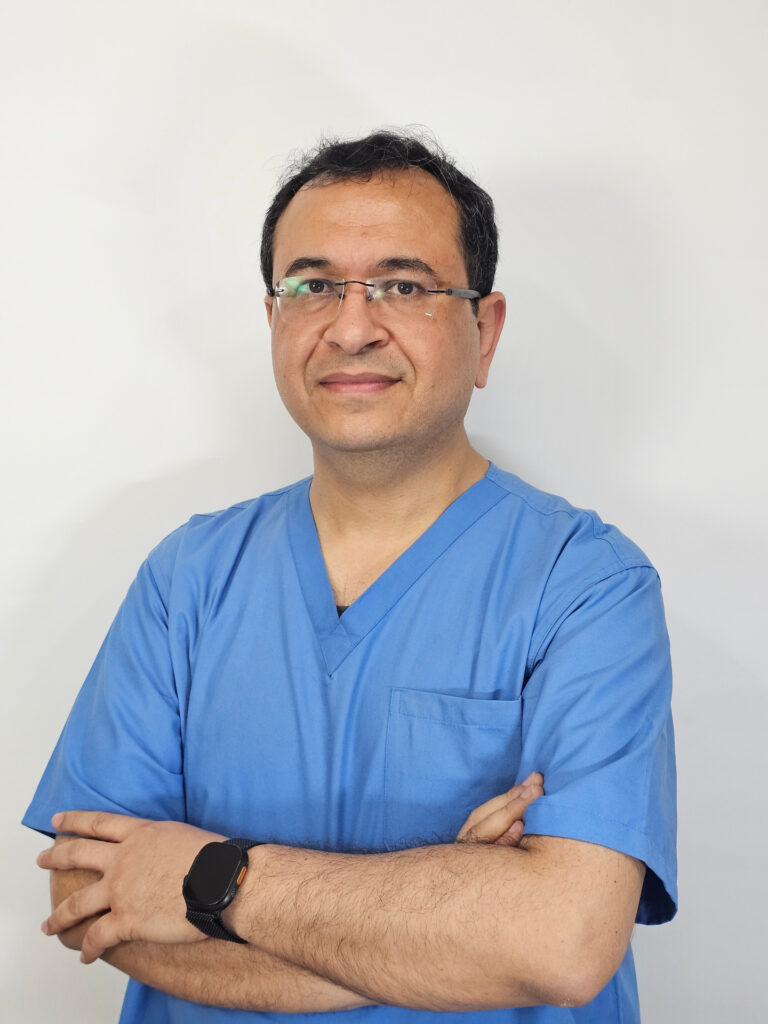 |
About Dr. Vikas Kathuria Dr. Vikas Kathuria (MBBS, MS, M.Ch Neurosurgery) is a senior neurosurgeon in Gurgaon with more than 25 years of experience in brain and spine care. He consults at Kathuria Brain & Spine Neuro Centre, #7311, Behind DLF Super Mart 2, DLF Phase IV, Near Huda City Centre Metro Station, Gurugram 122009. Timings: Mon to Sat 10:30 AM to 12:30 PM and 6:00 PM to 7:30 PM, Sunday 10:00 AM to 2:00 PM. |
Frequently Asked Questions
Causes and Diagnosis
Q1. Is Bell’s palsy caused by cold wind?
Patients often report cold exposure as a trigger, but doctors have not fully proven the exact cause. Many doctors believe a viral reactivation makes the facial nerve swell, and cold or sudden weather changes may contribute. Studies on the cold-weather link have given mixed results.
Q2. How do I know if my drooping face is Bell’s palsy or a stroke?
In Bell’s palsy the whole side of the face is weak, including the forehead, and there is usually no arm or leg weakness. In a stroke the forehead often keeps moving and there may be arm weakness, speech difficulty or confusion. Since the two can look alike at first, treat any sudden facial droop as an emergency until a doctor examines you.
Q3. What is the 72-hour rule in Bell’s palsy?
Research shows that corticosteroid treatment works best when you start it within 72 hours of the first symptom. This is why you should see a doctor on the same day rather than waiting to see if the face improves by itself.
Treatment and Recovery
Q4. How long does Bell’s palsy take to recover?
Improvement usually begins within two to three weeks, and most people recover fully within three to six months. Around 70 to 75 percent recover completely, while a smaller group keeps some weakness or unwanted facial movements.
Q5. Does Bell’s palsy need surgery?
Most patients never need surgery. Doctors consider facial nerve decompression only in rare, severe cases that do not improve, after a specialist evaluation.
Eye Care, Recurrence and Choosing a Doctor
Q6. How do I protect my eye during Bell’s palsy?
If the eye does not close fully, use lubricating drops during the day, ointment at night, and tape the eyelid shut for sleep as advised by your doctor. Wear sunglasses outdoors and see an eye specialist if you notice pain, redness or blurred vision.
Q7. Can Bell’s palsy come back?
Recurrence is uncommon but possible. Keeping blood sugar and blood pressure under control and avoiding prolonged cold exposure of the face are sensible precautions.
Q8. Which doctor should I consult for Bell’s palsy in Gurgaon?
A neurosurgeon or neurologist can confirm the diagnosis, rule out other causes such as stroke or a tumour pressing on the facial nerve, and plan treatment. Dr. Vikas Kathuria evaluates facial palsy at Kathuria Brain & Spine Neuro Centre, DLF Phase IV, Gurugram.
Face Suddenly Drooping? Do Not Wait.
Early evaluation within 72 hours gives you the best chance of full recovery.
Disclaimer: This article is for general education only and is not a substitute for medical advice, diagnosis or treatment. Do not start or stop any medicine without consulting your doctor. In case of sudden facial droop with weakness in an arm or leg, speech difficulty or severe headache, go to the nearest emergency department immediately.
- 72 hour rule Bell’s palsy
- Bell’s palsy causes
- Bell’s palsy doctor Gurgaon
- Bell’s palsy exercises
- Bell’s palsy eye care
- Bell’s palsy in winter
- Bell’s palsy recovery time
- Bell’s palsy symptoms
- Bell’s palsy treatment Delhi NCR
- Bell’s palsy treatment Gurgaon
- Bell’s palsy vs stroke
- Best Neurosurgeon in Gurgaon
- chehra tedha hona
- cold wave health tips
- Dr Vikas Kathuria
- face drooping causes
- face drooping on one side
- facial nerve palsy
- facial nerve paralysis
- facial paralysis treatment Gurgaon
- idiopathic facial paralysis
- Kathuria Brain and Spine Neuro Centre
- muh tedha hona
- muh tedha ka ilaj
- Neurosurgeon Gurgaon
- seventh cranial nerve palsy
- steroids for Bell’s palsy
- sudden facial droop
- Winter Brain Health
- Winter Health Tips Gurgaon