
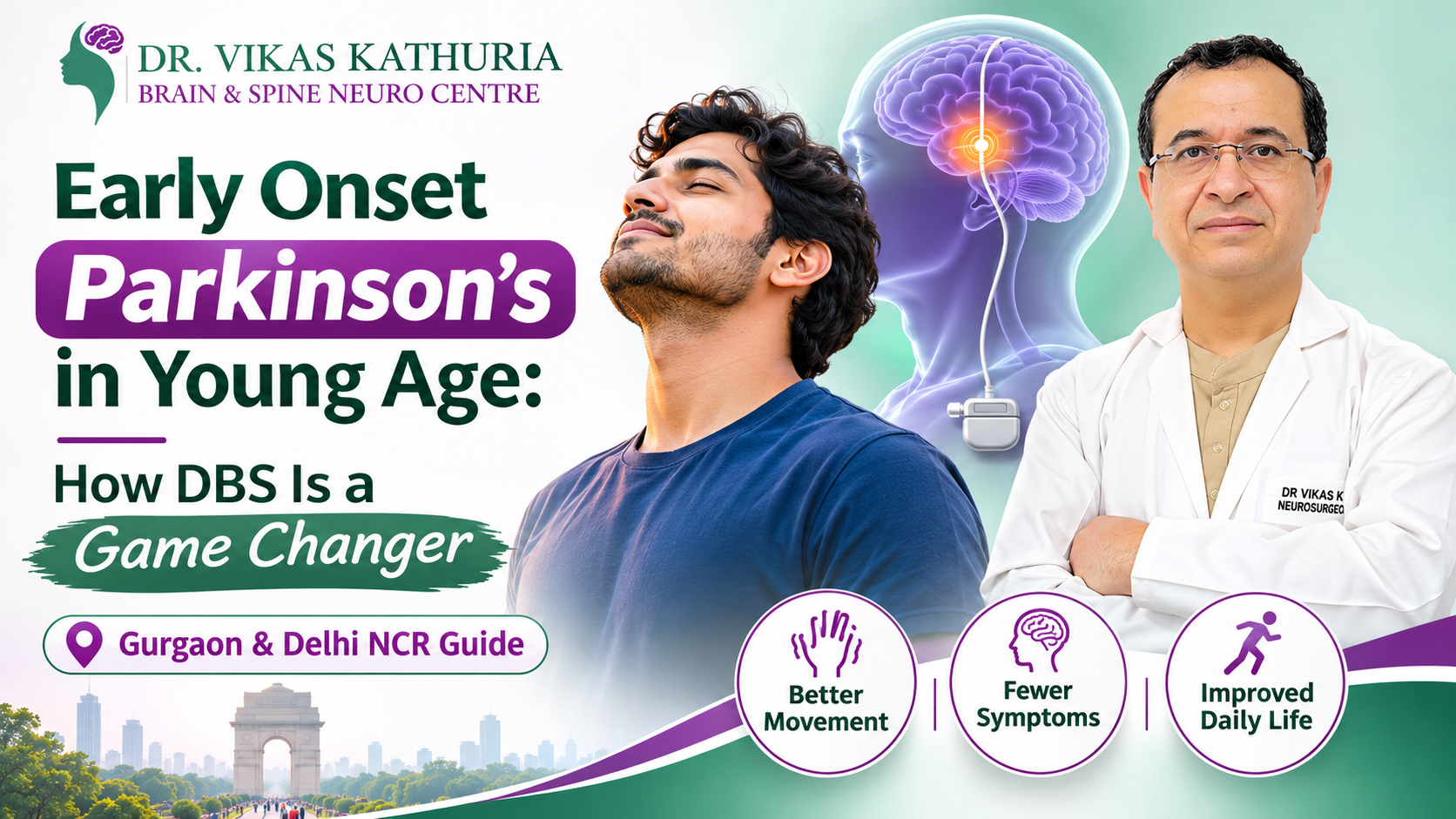
Early Onset Parkinson’s in Young Age: How DBS Is a Game Changer (Gurgaon & Delhi NCR Guide)
Quick Answer
Early onset Parkinson’s disease means symptoms start before age 50, and in India a growing number of patients are now diagnosed in their 30s and 40s. Medicines work well at first, but many young patients develop wearing-off and involuntary movements within a few years. Deep brain stimulation (DBS) is an adjustable, reversible surgery that smooths these swings, adds more good-mobility hours and often lets patients reduce tablets. It is not a cure, and careful selection matters. At Kathuria Brain & Spine Neuro Centre in Gurgaon, every DBS candidate is assessed individually.
Forgetting to swing one arm while walking, handwriting that keeps shrinking, a tremor in the thumb after a long meeting: at 35 or 42, most people blame stress, a pinched nerve or too many hours at the laptop. Yet neurologists and neurosurgeons across Delhi NCR are seeing early onset Parkinson’s in people who are still building careers, raising children and paying home loans.
The good news is that treatment has moved far beyond tablets alone. For the right patient, DBS surgery for early onset Parkinson’s can return smooth, predictable movement for years. This guide explains the early signs, why Parkinson’s can strike young, how DBS works, who benefits most, and what to expect if you are searching for care in Gurgaon or Delhi NCR.
What Is Early Onset Parkinson’s Disease?
Parkinson’s disease develops when nerve cells in a deep brain region called the substantia nigra slowly stop producing dopamine, the chemical that coordinates smooth movement. When symptoms begin before age 50, doctors call it early onset or young-onset Parkinson’s. Some specialists, however, use a stricter cut-off of 40 to 45 years, and onset before 21 is called juvenile Parkinson’s.
In fact, India’s numbers are striking. AIIMS Delhi specialists have reported that nearly 40 to 45 percent of patients here develop the disease between ages 22 and 49, with an average onset around 51, roughly a decade earlier than in Western countries. For example, AIIMS neurosurgery head Dr P Sarat Chandra has said he has treated a patient as young as 25.
Early Signs of Early Onset Parkinson’s in Your 30s and 40s
Early onset Parkinson’s symptoms are easy to dismiss. In addition, they often start on one side and look like overwork, a sports injury or a vitamin deficiency. Watch for these patterns:
Movement (motor) signs
- Resting tremor in a finger, hand or foot
- Slowness (bradykinesia): buttons, typing and brushing take longer
- Stiffness or aching in one shoulder or leg
- Smaller, cramped handwriting (micrographia)
- One arm not swinging while walking, or dragging a foot
- Softer voice and a less expressive face
Non-motor signs that can come first
- Acting out dreams, shouting or kicking in sleep (REM sleep behaviour disorder)
- Reduced sense of smell
- Long-standing constipation
- Unexplained low mood, anxiety or fatigue
- Painful foot cramps (dystonia), often in the morning
Do not label it “just stress”. If tremor, slowness or stiffness persists beyond a few weeks, especially on one side, see a movement-disorder specialist. Therefore, a proper examination, and sometimes a brain scan, separates Parkinson’s from look-alike conditions.
Why Does Early Onset Parkinson’s Start So Young?
The exact cause of early onset Parkinson’s is still unknown, but genetics play a larger role in young-onset cases. Research suggests that at least 5 to 10 percent of early onset patients carry a known gene change, and Indian studies show the share can be higher in the youngest age groups. Variants in genes such as Parkin, PINK1 and LRRK2 are well described. In addition, environmental exposure, particularly pesticides and certain industrial toxins, is also linked with higher risk.
This is why a young patient’s evaluation looks different from an older patient’s. Specialists may check for genetic causes, medicine-induced parkinsonism, toxin exposure and metabolic conditions before settling on the diagnosis. Genetic results can also help plan treatment, because some variants respond to DBS better than others.
The Problem With Medicines Alone in Early Onset Parkinson’s
Levodopa is still the most effective medicine for early onset Parkinson’s, and the first few years usually feel like a honeymoon. However, the catch is that younger patients tend to develop motor complications earlier: doses wear off before the next one is due (“off” time), and extra involuntary movements (dyskinesia) appear at peak dose. Because young patients live with the disease for decades, higher and more frequent doses become a long-term burden.
There is also the human side. For instance, a 38-year-old manager in Cyber City cannot freeze mid-presentation. A 41-year-old father in Noida wants to lift his child without fear. These are the moments when deep brain stimulation deserves a serious conversation.
What Is Deep Brain Stimulation (DBS)?
DBS is a surgical therapy often described as a “brain pacemaker”. Thin electrodes are placed in a movement-control target, most commonly the subthalamic nucleus (STN) or the globus pallidus (GPi). The electrodes connect through a wire under the skin to a small pulse generator implanted below the collarbone. The device sends gentle, continuous electrical pulses that calm the abnormal brain signals behind tremor, stiffness and dyskinesia.
Unlike older destructive procedures, DBS is adjustable and reversible. The settings can be changed from outside the body as your disease changes, and the system can be switched off or removed if needed. To understand the procedure in more depth, see our deep brain stimulation service page and our earlier article on the effect of deep brain stimulation in Parkinson’s disease.
Why DBS Is a Game Changer for Early Onset Parkinson’s Patients
1. More “ON” hours
DBS reduces the unpredictable swings between mobile and stiff states, so the day becomes easier to plan.
2. Fewer tablets, less dyskinesia
Many patients can lower their levodopa dose after surgery, which reduces dose-related involuntary movements.
3. Proven in earlier-stage disease
The EARLYSTIM trial, published in the New England Journal of Medicine, enrolled patients with a mean age of 52 and early motor complications. DBS plus medicines improved quality of life by about 26 percent, while medicines alone showed no improvement.
4. Protects work and family life
In addition, a follow-up analysis found DBS gave greater improvement in social, occupational and psychosocial functioning than medicines alone.
Moreover, deep brain stimulation technology keeps improving too. Newer directional electrodes and devices that sense brain activity allow more precise programming, which can reduce side effects. Read the full EARLYSTIM social and occupational functioning study or the review on DBS in early onset Parkinson’s disease if you like to see the evidence yourself.
Medicines Alone vs Medicines Plus DBS
| Factor | Medicines Alone | Medicines + DBS |
|---|---|---|
| ON/OFF fluctuations | Tend to increase over time | Usually smoother and more predictable |
| Dyskinesia | Often rises with higher doses | Often reduced |
| Dose adjustment | Change tablets and timings | Settings adjusted by programming |
| Reversible | Yes | Yes, can be switched off |
| Cures the disease | No | No |
Who Is a Good Candidate for DBS in Early Onset Parkinson’s?
Overall, good selection is the single biggest factor in a good outcome. The usual checklist includes:
- A confirmed diagnosis of Parkinson’s disease, not an atypical form (atypical parkinsonism does not respond well to DBS)
- A clear response to levodopa, because DBS tends to help the same symptoms that medicines help
- Disabling tremor, wearing-off or dyskinesia despite optimised medicines
- Good memory and thinking, and stable mental health, checked before surgery
- Realistic expectations and a supportive family for follow-up and programming
Important honesty: DBS does not cure Parkinson’s, does not help every symptom (balance problems and non-motor symptoms may persist or progress), and may be less suitable in certain genetic subtypes. However, patients with only mild impact on quality of life may gain less. Therefore, a joint decision by a movement-disorder neurologist and a neurosurgeon is the safest route.
The DBS Journey: What to Expect
- Evaluation: detailed neurological assessment, levodopa response testing, MRI brain and memory and mood screening.
- Planning: MRI-guided mapping to choose the exact target and trajectory for the electrodes.
- Surgery: electrodes are placed with the patient often awake for part of the procedure so the team can test responses; the pulse generator is then implanted below the collarbone.
- Recovery: hospital stay is usually a few days, with antibiotics and wound care.
- Programming: the stimulator is switched on after healing and fine-tuned over several visits while medicines are adjusted.
Risks and Cost: Straight Talk
Risks include infection, bleeding in the brain, hardware problems and stimulation effects such as tingling, speech changes or mood changes. However, an experienced team and careful programming keep these low, and your surgeon should explain them in plain language before you decide.
Cost varies with the device type (rechargeable or non-rechargeable), hospital room category, number of electrodes and programming visits. Ask for a written estimate that also covers battery replacement and follow-up, and check your insurance policy before surgery.
Early Onset Parkinson’s Care in Gurgaon and Delhi NCR
Patients with early onset Parkinson’s travel to our Gurgaon clinic from Gurgaon (Golf Course Road, Sohna Road, Sushant Lok, DLF Phase 1, Phase 4 and Phase 5, Sector 26A, Sector 53), Delhi, Noida, Faridabad and across Delhi NCR, as well as from other states and countries. If you are searching for early onset Parkinson’s treatment or a DBS surgeon in Gurgaon, a consultation at Kathuria Brain & Spine Neuro Centre helps you understand whether DBS is right for you, and what to do if it is not yet the time. Patients coming from abroad can read our pre-visit facility guide.

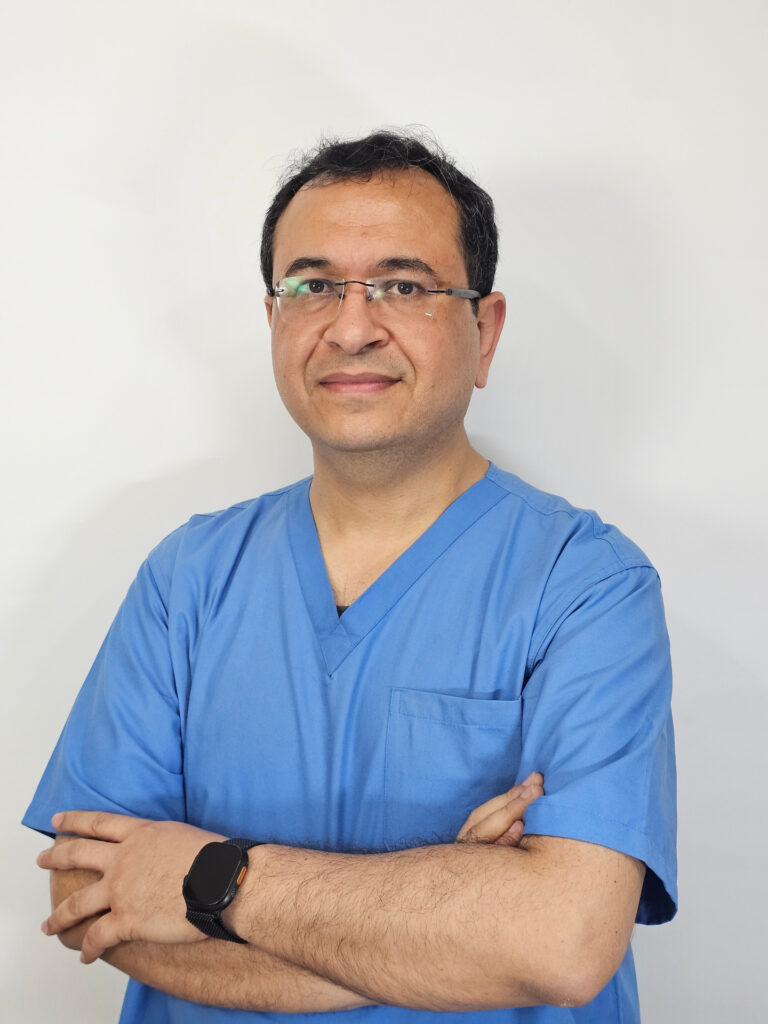
Dr. Vikas Kathuria
MBBS, MS, M.Ch (Neurosurgery) | 25+ years of experience
Senior consultant neurosurgeon at Max Hospital, Gurgaon, treating brain and spine conditions including movement disorders. Meet the doctor
Frequently Asked Questions
What is early onset Parkinson’s disease?
It means the first symptoms appear before age 50, sometimes before 40. The dopamine loss is the same as in regular Parkinson’s, but a genetic link is more common.
At what age is DBS surgery usually considered?
There is no fixed age. DBS is considered when medicines still work but cause wearing-off or dyskinesia that disturb daily life. Younger patients are often good candidates.
Is DBS a cure for Parkinson’s disease?
No. DBS controls motor symptoms such as tremor, stiffness, slowness and dyskinesia, and often allows a lower medicine dose, but it does not cure the disease or stop it.
Should young Parkinson’s patients get genetic testing?
It is worth discussing, especially if symptoms began before 40 or there is a family history. The result can help predict disease behaviour and guide DBS planning.
How long is the hospital stay after DBS?
Usually a few days. The stimulator is switched on after healing and then fine-tuned over several follow-up visits.
What are the risks of DBS surgery?
Infection, bleeding in the brain, hardware problems, and stimulation effects such as speech or mood changes. However, careful selection keeps these low.
Can I continue my job and family life after DBS?
Many young patients return to work and routine activities after recovery. For example, in the EARLYSTIM trial, DBS improved social and occupational functioning compared with medicines alone.
How do I book a DBS consultation in Gurgaon or Delhi NCR?
Call +91-8377080260 or +91-9215151260, message on WhatsApp, or use the appointment form. Dr. Vikas Kathuria consults at DLF Phase IV (near Huda City Centre Metro Station), Qutub Plaza in DLF Phase 1, and South Point Mall in DLF Phase 5, Gurugram.
Book Your DBS Consultation
Living With Parkinson’s at a Young Age?
Get a clear, honest opinion on whether DBS is right for you, and when.
Consult Dr. Vikas Kathuria at 3 Locations in Gurgaon
Kathuria Brain & Spine Neuro Centre
#7311, Ground Floor & LGF, Behind DLF Super Mart 2, DLF Phase IV, Near Huda City Centre Metro Station, Gurugram, Haryana 122009
Timings: Mon–Sat 10:30 AM–12:30 PM and 6:00–7:30 PM | Sun 10:00 AM–2:00 PM
Phone: +91-8377080260 / +91-9215151260
Email: care@sabclinic.com
Qutub Plaza, DLF Phase 1
423, 4th Floor, Qutub Plaza, Qutub Plaza Road, DLF Phase-1, Sector 26A, Gurugram, Haryana 122002
OPD: Daily 11:30 AM–1:30 PM and 6:00–8:00 PM
Appointments available
South Point Mall, DLF Phase 5
SPO-101A, First Floor, South Point Mall, DLF Phase 5, Sector 53, Gurugram, Haryana 122011
OPD: Daily 11:30 AM–1:30 PM and 6:00–8:00 PM
Appointments available from 1 December 2026
Related reading: Epilepsy treatment (DBS is also used in selected epilepsy cases), stroke in young adults, and our brain and spine health blog. For patient-friendly research, the Michael J. Fox Foundation summarises the EARLYSTIM findings.
Disclaimer: This article is for general education and is not a substitute for personal medical advice. Treatment decisions, including DBS, must be made after a full evaluation by qualified specialists.
- Best Neurosurgeon in Gurgaon
- brain pacemaker surgery
- DBS for early onset Parkinson's
- DBS surgeon in Gurgaon
- DBS surgery Delhi NCR
- DBS surgery for Parkinson's
- DBS surgery Gurgaon
- DBS surgery in India
- Deep Brain Stimulation
- Deep Brain Stimulation Gurgaon
- Dr Vikas Kathuria
- dyskinesia treatment
- early onset Parkinson's
- early onset Parkinson's treatment
- EARLYSTIM trial
- Kathuria Brain and Spine Neuro Centre
- levodopa wearing off
- Movement Disorders
- Neurosurgeon Delhi NCR
- Parkinson's Disease Treatment
- Parkinson's genetic testing
- Parkinson's in young age
- Parkinson's surgery
- Parkinson's symptoms in 30s and 40s
- Parkinson's treatment Delhi NCR
- Parkinson's Treatment in Gurgaon
- Parkinson's Treatment in India
- subthalamic nucleus DBS
- Tremor Treatment
- young onset Parkinson's disease