
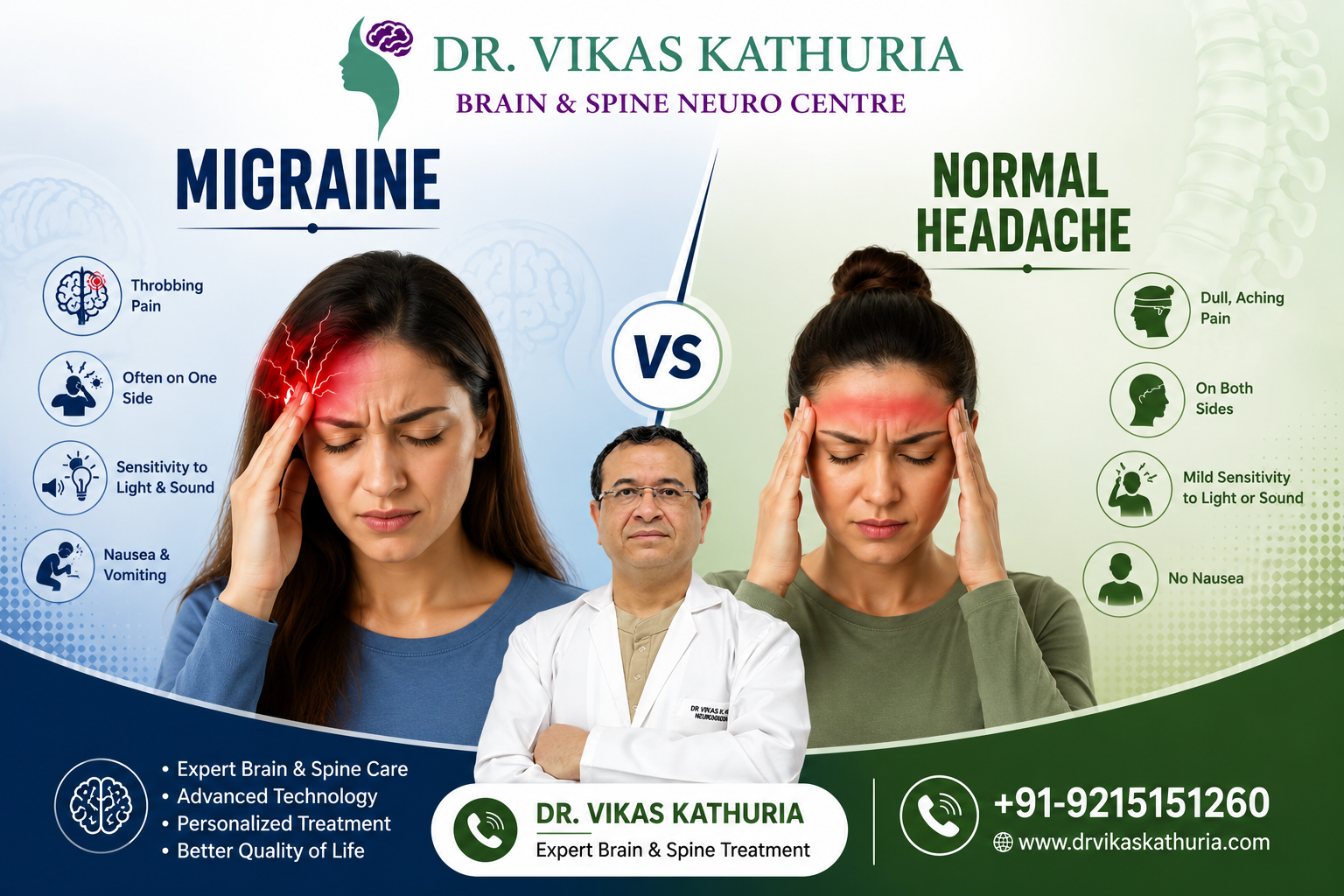
Migraine vs Tension Headache vs Sinus Headache: How to Tell the Difference

Almost everyone gets a headache at some point, but not every headache is the same — and not every headache
needs the same treatment. In Gurgaon and across Delhi NCR, where long commutes, screen-heavy jobs, pollution
spikes, and erratic sleep are part of daily life, three types of headaches show up most often at the clinic:
migraine, tension headache, and sinus headache. They can feel confusingly similar, which is exactly why so
many people end up treating the wrong one for months. This guide breaks down the
migraine vs tension headache difference, where sinus headaches fit in, and how location-based
factors in Gurgaon and Delhi NCR make accurate diagnosis and the right headache treatment in Gurgaon even more
important.
Why This Confusion Happens So Often
Medical research has identified over 150 distinct types of headaches, each with its own triggers, pain pattern,
and treatment path. Migraine, tension-type, and sinus headaches sit at the top of that list simply because they
are the most common — and because their symptoms overlap enough that patients (and sometimes chemists) mix them
up. Someone with a migraine may be told it’s “just sinus,” while someone with genuine sinus pressure gets handed
migraine medication that does nothing. Getting the label right is the first step toward getting relief.

Migraine vs Tension Headache: The Core Differences
A migraine
is a neurological condition, not just “a bad headache.” It typically develops when overly sensitive nerve
pathways in the brain trigger pain, often on one side of the head, along with nausea, sensitivity to light and
sound, and sometimes visual disturbances called an aura. A tension headache, on the other hand, comes from
tightened muscles across the scalp, neck, and shoulders — usually from stress, poor posture, or long hours at a
desk — and tends to feel like a dull, band-like pressure around the whole head rather than a throbbing pain on
one side.
Comparison Table: Migraine vs Tension vs Sinus Headache
| Feature | Migraine | Tension Headache | Sinus Headache |
|---|---|---|---|
| Pain Location | One side of the head, often throbbing | Both sides, band-like pressure | Forehead, cheeks, around the eyes |
| Pain Type | Throbbing or pulsing | Dull, constant pressure | Deep, aching pressure |
| Associated Symptoms | Nausea, light/sound sensitivity, aura | Neck/shoulder tightness, mild fatigue | Nasal congestion, fever, thick discharge |
| Common Triggers | Hormones, certain foods, bright lights, poor sleep | Stress, poor posture, eye strain | Sinus infection, allergies, pollution |
| Duration | 4–72 hours | 30 minutes to several days | Days, tied to infection course |
| Worsens With Activity | Yes | Not usually | Sometimes, with bending forward |
What Is a Sinus Headache — And Is It Really a Headache?
True sinus headaches are less common than most people assume. Genuine sinus headaches occur alongside an active
sinus infection, with symptoms like fever, thick nasal discharge, and pressure that worsens when bending
forward. A large number of headaches that get labeled “sinus” in Gurgaon and Delhi NCR — especially during
pollution spikes and seasonal changes — are actually migraines with nasal-area pain and congestion-like
symptoms, misread as sinus trouble.
Location-Based Triggers: Why Gurgaon & Delhi NCR Residents Get More Headaches
Local environment plays a bigger role in headache frequency than most patients realize. A few factors specific
to Gurgaon and the wider Delhi NCR region tend to come up repeatedly in consultation:
Other Common Headache Triggers to Watch
Beyond location-based factors, several everyday triggers are worth tracking in a headache diary:
- Skipping meals or prolonged hunger
- Caffeine withdrawal or excess caffeine
- Alcohol consumption
- Certain foods — aged cheese, chocolate, processed and salty foods
- Bright or flickering lights, loud noises, strong smells
- Hormonal fluctuations, particularly in women
- Sudden stopping of painkillers containing caffeine
When Does a Headache Need Medical Evaluation?
Most headaches are manageable with rest, hydration, and lifestyle correction. But certain patterns call for a
proper evaluation with a
headache
treatment specialist in Gurgaon rather than continued self-medication:
- Headaches occurring more than 2–3 times a week
- Pain that disrupts work, sleep, or daily routine
- A new headache pattern after age 50
- Headache with fever, stiff neck, confusion, or slurred speech
- Sudden, severe “worst headache of my life” (seek emergency care immediately)
- Headache following a head injury or fall
- Vision changes, weakness, or numbness accompanying the headache
How Headaches Are Diagnosed
| Assessment | Purpose |
|---|---|
| Detailed Headache History | Identifies pattern, triggers, frequency, and duration |
| Neurological Examination | Rules out weakness, coordination, or reflex changes |
| MRI Brain | Used selectively when red-flag symptoms are present |
| Sinus Imaging / ENT Referral | Confirms or rules out active sinus infection |
| Blood Pressure Check | Rules out hypertension-related headache |
Treatment Options for Each Headache Type
Migraine Treatment
Management usually combines acute medication for active episodes with preventive medication for frequent
migraines, alongside trigger tracking through a headache diary and lifestyle adjustments around sleep, meals,
and screen time. Detailed treatment protocols are covered on our
migraine
treatment in Gurgaon page.
Tension Headache Treatment
Tension headaches usually respond well to over-the-counter pain relief for occasional episodes, physiotherapy
or posture correction for desk-job-related strain, stress management techniques, and regular movement breaks
during long work hours.
Sinus Headache Treatment
Treatment targets the underlying sinus infection or allergy — decongestants, antihistamines, or antibiotics
when a bacterial infection is confirmed — rather than standard headache painkillers, which typically offer
limited relief for true sinus pain.
Keeping a Headache Diary: The Simplest Diagnostic Tool
Before any medication or imaging, one of the most useful things a patient can do is track their headaches for
two to four weeks. A simple diary noting the date, time, pain location, intensity, duration, associated
symptoms, and possible triggers (food, sleep, weather, stress, screen time) gives a doctor far more diagnostic
information than a single consultation ever could. Patterns that seem random day-to-day — a headache every time
the AQI crosses a certain level, or every Monday after a poor weekend sleep schedule — often become obvious once
written down. This single habit frequently shortens the path from “I don’t know what kind of headache I have”
to an accurate diagnosis and a working treatment plan.
Useful details to record in a headache diary:
- Exact time the headache started and how long it lasted
- Pain location — one side, both sides, forehead, behind the eyes
- Pain intensity on a scale of 1 to 10
- What you ate or drank in the hours before
- Sleep quality the night before
- Stress level or unusual events that day
- Weather or pollution conditions, especially in Delhi NCR
- Any medication taken and whether it helped
Consultation & Treatment Cost in Gurgaon
A first consultation for headache evaluation with Dr. Vikas Kathuria is priced at ₹2,500 and includes a detailed
history, neurological examination, and a clear discussion of whether the headache pattern fits migraine, tension,
sinus, or another category. Further costs depend entirely on what the diagnosis calls for — a tension headache
managed through posture correction and physiotherapy costs far less over time than a migraine requiring ongoing
preventive medication, and a genuine sinus headache may need an ENT referral and a short course of targeted
medication rather than long-term neurological treatment. Because pricing varies so much by diagnosis, the
consultation itself is the most cost-effective first step — it prevents months of trial-and-error spending on
the wrong category of treatment.
Can Migraine, Tension, and Sinus Headaches Overlap?
Yes, and this is one of the more under-discussed reasons headaches are hard to self-diagnose. A person with an
underlying migraine tendency can also develop tension-type headaches from desk posture, and a seasonal sinus
infection can trigger a migraine in someone who is already prone to one. This is sometimes called a “mixed
headache” pattern. When this overlap is missed, treatment aimed at only one type — say, decongestants for
what’s actually a migraine with congestion — brings little to no relief. A proper neurological evaluation looks
at the full symptom picture rather than treating the most obvious label.
Recovery & Prevention Timeline
- Week 1: Trigger diary started; acute symptom relief begins
- Month 1: Noticeable pattern identification; frequency starts reducing with lifestyle changes
- Month 3: Preventive treatment (if prescribed) shows measurable reduction in episodes
- Month 6: Most patients report significantly better headache control with a personalized plan
Why Choose Dr. Vikas Kathuria for Headache Treatment in Gurgaon
With 26+ years of experience and over 2.5 lakh patients treated, Dr. Vikas Kathuria takes a diagnosis-first
approach to every headache case — carefully distinguishing between migraine, tension, and sinus-related pain
before recommending a treatment path. Patients across Gurgaon, Delhi, and the wider Delhi NCR region can consult
at Max Hospital, Gurgaon, or at Skin Aura Brain & Spine Neuro Centre, DLF Phase IV, Gurugram, with online
video consultations also available for those with limited mobility or based outside NCR.
Not sure whether your headaches are migraine, tension, or sinus-related? Get an accurate diagnosis today.
Frequently Asked Questions
1. What is the main difference between migraine and tension headache?
Migraine typically causes throbbing, one-sided pain with nausea and light sensitivity, while tension headaches cause a dull, band-like pressure across the whole head without nausea.
2. How can I tell if my headache is from sinus problems?
A true sinus headache usually comes with nasal congestion, thick discharge, fever, and pressure that worsens when bending forward — symptoms not typically seen with migraine or tension headaches.
3. Can air pollution in Gurgaon and Delhi NCR trigger migraines?
Yes. High pollution levels are a recognized migraine trigger, and many patients in Delhi NCR notice increased headache frequency during poor air quality days.
4. When should I see a headache specialist instead of self-medicating?
If headaches occur more than 2–3 times a week, disrupt daily routine, or appear alongside symptoms like fever, vision changes, or weakness, it’s time to consult a specialist rather than continue self-treatment.
5. Is a sinus headache actually a migraine in disguise?
Often, yes. Many headaches self-diagnosed as “sinus” are actually migraines with facial pain and congestion-like symptoms, which is why an accurate diagnosis matters before starting treatment.
6. Can tension headaches be prevented with posture correction?
Yes, correcting desk posture, taking regular movement breaks, and managing stress significantly reduce the frequency of tension-type headaches, especially in desk-based jobs common across Gurgaon’s corporate hubs.
7. What tests are done to diagnose the type of headache?
Diagnosis usually starts with a detailed history and neurological exam. Imaging like MRI or sinus scans is used selectively, mainly when red-flag symptoms are present.
8. Are migraines hereditary?
Migraines often run in families, and a family history of migraine is one of the recognized risk factors for developing the condition.
9. How long does a typical migraine last?
An untreated or under-treated migraine attack can last anywhere from 4 hours to 72 hours, depending on the individual and treatment response.
10. Where can I get headache treatment in Gurgaon?
Dr. Vikas Kathuria provides headache, migraine, and neurological consultations at Max Hospital, Gurgaon, and Skin Aura Brain & Spine Neuro Centre, DLF Phase IV, Gurugram, with online consultations also available for Delhi NCR patients.
Final Thoughts
Migraine, tension, and sinus headaches can feel deceptively similar, but treating the wrong one rarely brings
lasting relief. If your headaches are frequent, disruptive, or don’t respond to usual pain relief, an accurate
diagnosis is the fastest path to real improvement. Book a consultation with Dr. Vikas Kathuria in Gurgaon for a
proper evaluation and a treatment plan built around your specific headache pattern.