
Spinal Stenosis: Symptoms, Treatment & When Surgery Is Needed (Gurgaon & Delhi NCR Guide)
Quick Answer
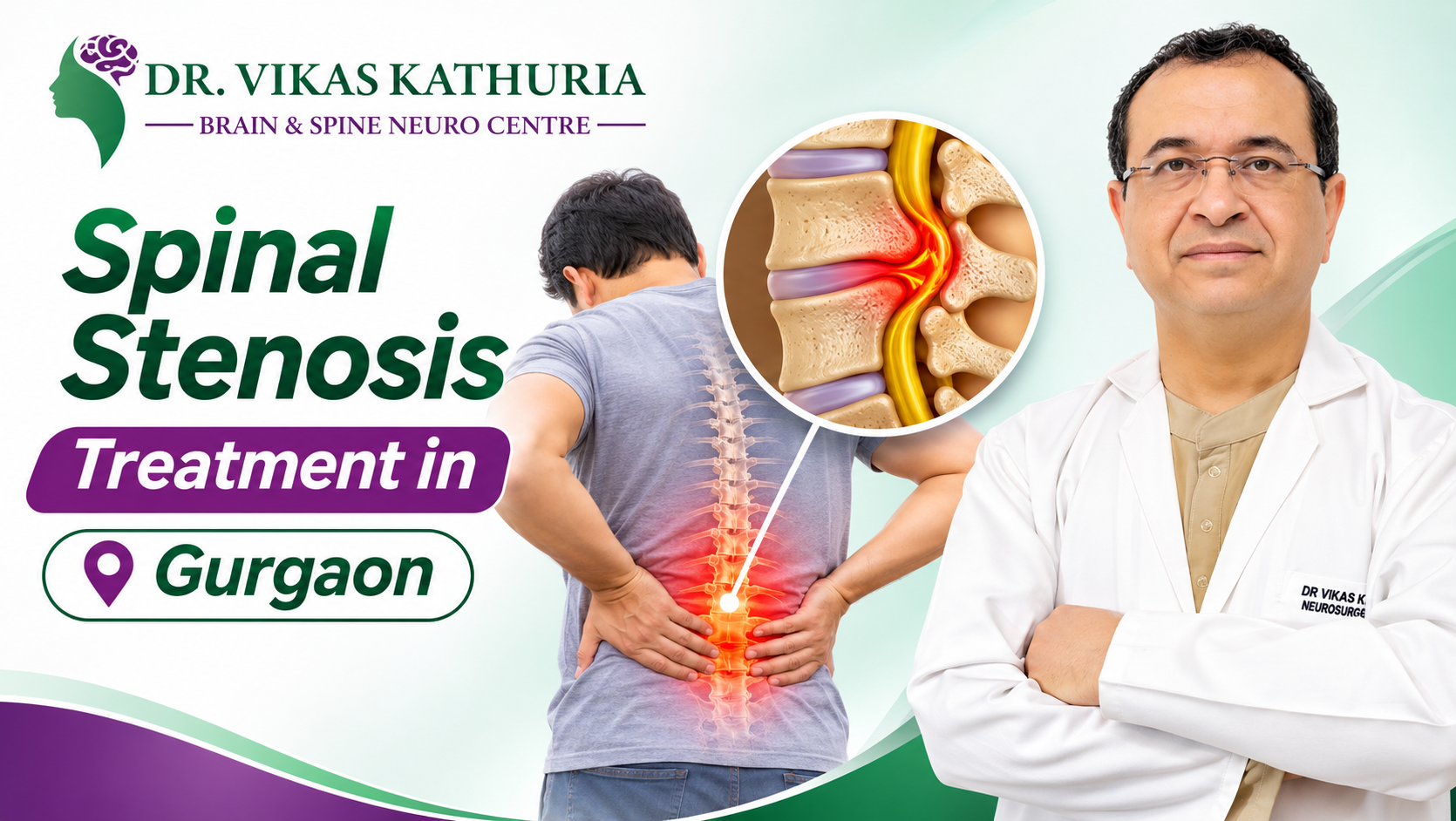
Spinal stenosis is a narrowing of the spinal canal that squeezes the spinal cord or nerves. In the lower back it causes leg pain, heaviness or numbness while standing or walking, which eases when you sit or bend forward. Many patients improve with physiotherapy, medicines and lifestyle changes. However, surgeons advise surgery when weakness, severe pain or bladder and bowel problems appear. Therefore, early evaluation for spinal stenosis treatment in Gurgaon helps protect your nerves.
Do your legs feel heavy or numb after a short walk in the market, at South Point or while climbing stairs at home? Do you need to stop, lean on a trolley or sit down before the pain settles? Many people in Gurgaon and Delhi NCR put this down to age, tiredness or a weak back and live with it for years. In reality, this pattern is a classic sign of spinal stenosis, a condition that doctors can manage well when they identify it on time.
This guide explains spinal stenosis symptoms, causes, tests, non-surgical care and surgical options in simple language. Moreover, it helps patients and families searching for reliable spinal stenosis treatment in Gurgaon, whether you live near Qutub Plaza, South Point or DLF.
What You Will Learn
- What is spinal stenosis?
- Types of spinal stenosis
- Symptoms you should not ignore
- Emergency warning signs
- Causes and risk factors
- How doctors diagnose spinal stenosis
- Non-surgical treatment
- When you need surgery and which surgeries doctors use
- Recovery and daily care
- Treatment for patients from Qutub Plaza, South Point and DLF
- Frequently asked questions
What Is Spinal Stenosis?
The spine is a column of bones that protects the spinal cord and the nerves branching from it. In other words, spinal stenosis means the space inside this column has become too small. As a result, the narrowed space presses on the spinal cord or on the nerve roots, and that pressure produces pain, tingling, numbness or weakness.
The condition usually develops slowly. Age-related wear of the spine is the most common reason, so doctors see spinal stenosis mostly after the age of 50. Some people have no symptoms at all, while others find that their walking distance shrinks month by month. Because the changes are gradual, patients often adjust their lifestyle without realising that something is wrong with the spine.
Types of Spinal Stenosis
The type of spinal stenosis depends on where the narrowing happens. Knowing the level is important because it decides the symptoms and the treatment plan.
| Type | Area Affected | How It Usually Feels |
|---|---|---|
| Lumbar spinal stenosis | Lower back | Cramping, pain or heaviness in one or both legs while standing or walking; relief on sitting |
| Cervical spinal stenosis | Neck | Neck pain, tingling in hands, clumsy fingers, balance problems |
| Thoracic spinal stenosis | Mid back | Less common; may cause leg weakness or imbalance |
Spinal Stenosis Symptoms You Should Not Ignore
Spinal stenosis symptoms differ from person to person. However, the common thread is that something compresses the nerves, so the complaints often travel away from the spine into the arms or legs.
Lower Back (Lumbar) Symptoms
- Pain, cramping or heaviness in the legs while standing or walking
- Relief when sitting, bending forward or leaning on a trolley
- Numbness or tingling in the buttocks, thighs or feet
- Weak legs or a feeling that the foot is dragging
- Lower back pain that is worse on standing straight
Neck (Cervical) Symptoms
- Neck pain and stiffness
- Numbness, tingling or weakness in the hands and arms
- Difficulty with buttons, writing or holding objects
- Unsteady walking and poor balance
- Rarely, bladder or bowel changes
The Walking Test: Neurogenic Claudication
Doctors call the typical leg complaint of lumbar spinal stenosis neurogenic claudication. For example, you walk a short distance, the legs become heavy or painful, and you must stop. The pain settles when you sit or bend forward, because bending opens up the space around the nerves. In contrast, standing straight or walking downhill narrows that space and brings the pain back.
Leg pain on walking can also come from poor blood flow in the leg arteries, so you should never diagnose it yourself. A proper examination and scan then separate the two conditions. If your leg pain also shoots down from the back, you may like to read our guide on sciatica treatment in Gurgaon and Delhi NCR.
Emergency Warning Signs: Do Not Wait
Visit a neurosurgeon or an emergency department immediately if you notice any of the following:
- Sudden loss of control over urine or stool
- Numbness in the groin or inner thighs
- Rapidly increasing weakness in one or both legs
- New difficulty using your hands or sudden loss of balance
These signs suggest serious pressure on the spinal cord or nerve bundle, and delay can lead to permanent damage.
Causes and Risk Factors of Spinal Stenosis
Gradual wear and tear causes most cases of spinal stenosis. As the spine ages, several changes happen together and reduce the space inside the canal.
- Bone spurs: Arthritis makes the spine grow extra bone, which pushes into the canal.
- Herniated or bulging discs: The soft cushion between bones dries up, bulges and presses on nerves.
- Thickened ligaments: Stiff, thick ligaments bulge into the canal.
- Slipped vertebra (spondylolisthesis): One bone slides forward over the next and narrows the passage.
- Injury: Accidents, fractures or swelling after earlier back surgery.
- Tumours: A rare cause that needs prompt scanning.
- Born with a narrow canal: Some people have a small spinal canal from birth.
Age above 50 is the biggest risk factor. However, younger patients can develop spinal stenosis if they have early arthritis, scoliosis or an inherited narrow canal. In addition, long desk hours, extra body weight and low physical activity, which are common in the corporate belt of Gurgaon, add strain on the lower spine over time.
How Is Spinal Stenosis Diagnosed?
First, the doctor takes a detailed history and examines your nerves. The doctor asks when the pain starts, how far you can walk and what relieves it. Then the doctor checks muscle strength, reflexes, sensation and balance.
MRI Scan
The most useful test. Because it shows the spinal cord, nerves, discs and ligaments clearly, it tells us exactly where and by how much the canal has narrowed.
CT Scan and X-Ray
In addition, these show bone spurs, alignment and any slipped vertebra. A CT scan helps when you cannot have an MRI.
Nerve Tests
Finally, doctors use EMG and nerve conduction studies in selected patients to separate spinal nerve compression from other nerve problems.
Doctors must always match scan findings with symptoms, because many people have narrowing on an MRI without any complaint. For this reason, we plan treatment for the patient, not for the report. If your main complaint is persistent pain in the lower back, our back pain treatment in Gurgaon page explains how we evaluate it.
Non-Surgical Spinal Stenosis Treatment
Most patients with mild to moderate spinal stenosis start with non-surgical treatment. In short, the goal is to calm the nerves, improve strength and increase the distance you can walk comfortably.
Physiotherapy and Exercise
Guided stretching and core strengthening support the spine. For instance, patients often tolerate bending-forward exercises and stationary cycling better than long walks.
Medicines
Anti-inflammatory and nerve-pain medicines, prescribed by your doctor, can reduce swelling around irritated nerves. They ease symptoms but do not widen the canal.
Injections
Selected patients benefit from epidural or nerve root injections for temporary relief. The effect varies, so doctors use them carefully and as part of a larger plan.
Lifestyle Changes
Weight reduction, correct posture, breaks from long sitting and shorter, more frequent walks all reduce the load on the lower spine.
When Is Surgery Needed for Spinal Stenosis?
Surgery is not the first step for most patients. However, a spine surgeon usually recommends it when:
- Pain or numbness continues despite a proper period of non-surgical treatment
- Walking distance keeps shrinking and daily life suffers
- Leg or arm weakness is increasing
- Bladder or bowel control starts to weaken
- In the neck, the spinal cord itself may be under pressure, a state called myelopathy, where surgeons often consider surgery earlier
Overall, the aim of surgery is to create more space for the nerves. It relieves pressure and is very effective for leg symptoms in many patients, but it cannot cure arthritis, so some stiffness or back ache may continue. In addition, like any operation, it carries risks such as infection, blood clots in a leg vein or a small tear in the covering of the spinal cord, which your surgeon will discuss with you in detail.
Common Surgeries for Spinal Stenosis
| Procedure | What It Does |
|---|---|
| Laminectomy | Removes the back part of the affected bone (lamina) to open up the canal |
| Laminotomy / Microdecompression | Removes only a small part of bone and ligament, preserving more of the normal spine |
| Foraminotomy | Widens the exit tunnel through which a single nerve root leaves the spine |
| Laminoplasty | Neck procedure that enlarges the canal by creating a hinge on the lamina |
| Spinal fusion | Joins bones with screws and a graft when the spine is unstable or slipped |
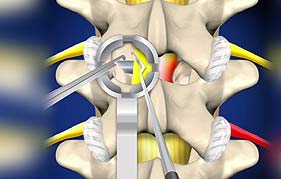
In addition, where suitable, minimally invasive methods allow decompression through a smaller cut with less muscle damage. Read more on our minimally invasive spine surgery page. For lower back procedures, visit lumbar spine surgery in Gurgaon, and for neck problems, see cervical spine surgery. Finally, the choice of operation always depends on the level, severity, spine stability and your general health.
Recovery After Spinal Stenosis Treatment
Recovery depends on the procedure and on how long pressure stayed on the nerves. Surgeons encourage most patients to start walking soon after surgery, with a gradual return to light activity over the following weeks. Patients avoid heavy lifting, sudden twisting and long, unsupported sitting until the surgeon permits. Also, physiotherapy plays a big role in rebuilding strength and confidence.
Nerves recover slowly, so numbness may take longer to improve than pain. Furthermore, regular follow-up visits help the surgeon track your progress and adjust the rehabilitation plan.
Daily Care for a Healthier Spine
Move Regularly
Short, frequent walks and gentle exercise keep the spine supple. Avoid staying in one position for too long.
Maintain a Healthy Weight
Every extra kilogram adds load to the lower back, so weight control often eases leg symptoms.
Set Up Your Workstation
Use a supportive chair, keep the screen at eye level and stand up every 30 to 45 minutes.
Spinal Stenosis Treatment in Gurgaon and Delhi NCR: Qutub Plaza, South Point and DLF
Dr. Vikas Kathuria consults at three convenient locations in Gurgaon: Qutub Plaza in DLF Phase 1, South Point Mall in DLF Phase 5 and the Kathuria Brain & Spine Neuro Centre in DLF Phase IV. Whichever is closest to your home or office, you can book a consultation for spinal stenosis evaluation and treatment planning without travelling far across Gurgaon and Delhi NCR.
Qutub Plaza Clinic
423, 4th Floor, Qutub Plaza, Qutub Plaza Road, DLF Phase 1, Sector 26A, Gurugram, Haryana 122002.
OPD: Daily 11:30 AM to 1:30 PM and 6:00 PM to 8:00 PM.
South Point Mall Clinic
SPO-101A, First Floor, South Point Mall, DLF Phase 5, Sector 53, Gurugram, Haryana 122011.
OPD: Daily 11:30 AM to 1:30 PM and 6:00 PM to 8:00 PM.
DLF Phase IV Clinic
Kathuria Brain & Spine Neuro Centre, #7311, behind DLF Super Mart 2, DLF Phase IV, near Huda City Centre Metro Station, Gurugram, Haryana 122009.
OPD: Monday to Saturday 10:30 AM to 12:30 PM and 6:00 PM to 7:30 PM, Sunday 10:00 AM to 2:00 PM.
Please call +91-8377080260 to confirm the timing before you visit.
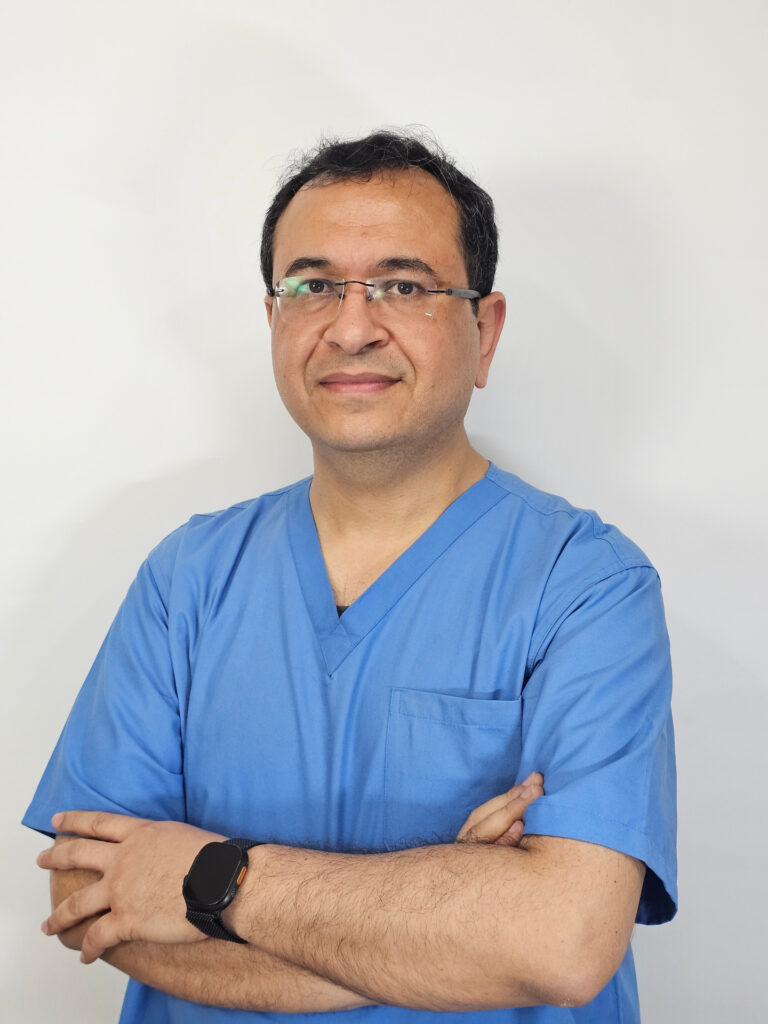
Why Consult Dr. Vikas Kathuria for Spinal Stenosis?
Dr. Vikas Kathuria is a neurosurgeon with more than 25 years of experience in brain and spine care. He first looks for the exact cause of your symptoms, explains your scan in plain language and recommends surgery only when the patient truly needs it. Where he advises surgery, he considers minimally invasive options for suitable patients. Learn more on the Meet the Doctor page.
You can also read trusted references on the condition from Mayo Clinic and OrthoInfo by the American Academy of Orthopaedic Surgeons. For neck-related symptoms, our neck pain treatment page is a useful next read.
Frequently Asked Questions About Spinal Stenosis
1. What is the best treatment for spinal stenosis?
There is no single best treatment. For example, mild cases improve with physiotherapy, medicines and lifestyle changes, while severe cases with weakness, constant pain or bladder and bowel problems need surgery. The right plan depends on your symptoms, scan and overall health.
2. Can spinal stenosis be cured without surgery?
Non-surgical care cannot reverse the narrowing itself, but it can control symptoms well in many patients. If symptoms keep getting worse despite treatment, doctors consider surgery to create space for the nerves.
3. Is spinal stenosis dangerous?
It usually progresses slowly and is not an emergency. However, severe untreated spinal stenosis can cause permanent numbness, weakness, balance problems or loss of bladder and bowel control, so a specialist should always examine it.
4. How do I know if my leg pain is from spinal stenosis or a blood flow problem?
Leg pain from spinal stenosis often eases when you sit or bend forward, while pain from poor blood flow usually settles simply by stopping. Therefore, only an examination and the right tests can tell the two apart.
5. When is surgery needed for spinal stenosis?
Doctors advise surgery when symptoms persist despite non-surgical treatment, walking becomes very limited, weakness increases, or bladder and bowel control weakens. They often treat spinal cord compression in the neck earlier.
6. How long is the recovery after spinal stenosis surgery?
Many patients walk soon after surgery and return to light activity within a few weeks. However, full recovery varies with the type of surgery, age and the condition of the nerves, and your surgeon will guide the timeline.
7. Should I see a neurosurgeon or an orthopaedic doctor for spinal stenosis?
Both neurosurgeons and orthopaedic spine surgeons treat spinal stenosis. However, neurosurgeons specialise in operating around the spinal cord and nerves, which makes the specialty a natural choice when nerve compression is the main problem.
8. Can patients from Qutub Plaza, South Point and DLF consult Dr. Vikas Kathuria?
Yes. Dr. Vikas Kathuria consults at Qutub Plaza (423, 4th Floor, DLF Phase 1, Sector 26A), South Point Mall (SPO-101A, First Floor, DLF Phase 5, Sector 53) and the clinic in DLF Phase IV near Huda City Centre Metro Station. You can book through the contact page or by phone.
Leg Pain or Numbness Slowing You Down?
Do not wait for weakness or bladder problems to appear. Get your spine examined and know your options for spinal stenosis treatment in Gurgaon and Delhi NCR.
Disclaimer: This article is for general education and is not a substitute for medical advice, diagnosis or treatment. Every patient is different, so please consult a qualified neurosurgeon or spine specialist about your own symptoms. Explore more articles on our blog.
- Brain and Spine Neuro Centre
- cervical spinal stenosis
- Dr Vikas Kathuria
- laminectomy in Gurgaon
- leg pain while walking
- lower back pain treatment
- lumbar spinal stenosis
- microdecompression surgery
- Minimally Invasive Spine Surgery
- neck pain and hand numbness
- nerve compression treatment
- neurogenic claudication
- Neurosurgeon DLF Phase 4
- neurosurgeon in Gurgaon
- non-surgical spinal stenosis treatment
- numbness in legs
- spinal canal narrowing
- spinal stenosis
- spinal stenosis causes
- spinal stenosis doctor in Gurgaon
- spinal stenosis Qutub Plaza
- spinal stenosis recovery
- spinal stenosis surgery
- spinal stenosis symptoms
- spinal stenosis treatment in Gurgaon
- spine care Gurgaon
- spine clinic DLF Phase 1
- spine specialist South Point Gurgaon
- spine surgeon in Gurgaon
- spine treatment in Delhi NCR